


+86-15339975475
info@archeanref.com
info@archeanref.com
+8615339975475
Wutongli, linyi, Shandong, China


Views: 0 Author: Site Editor Publish Time: 2026-11-09 Origin: Site


A Copeland compressor nameplate provides the identification and electrical information needed to begin a replacement inquiry. The full model number, serial number, voltage, phase, and frequency should be recorded before comparing compressors or requesting a quotation.
However, a nameplate is not a complete selection sheet. Cooling capacity, refrigerant approval, operating limits, lubricant requirements, and replacement compatibility may require additional product documentation.
This guide explains the main fields, common reading mistakes, and the information buyers should send to a supplier.
The nameplate or identification label is attached to the compressor. Its position and layout vary by product family, manufacturing period, and market. Do not confuse the compressor label with the label on the condensing unit, equipment cabinet, or shipping carton.
Photograph the complete label straight on, with enough light to capture small characters. Take a second image of the full compressor to show the terminal box, connections, and overall configuration.
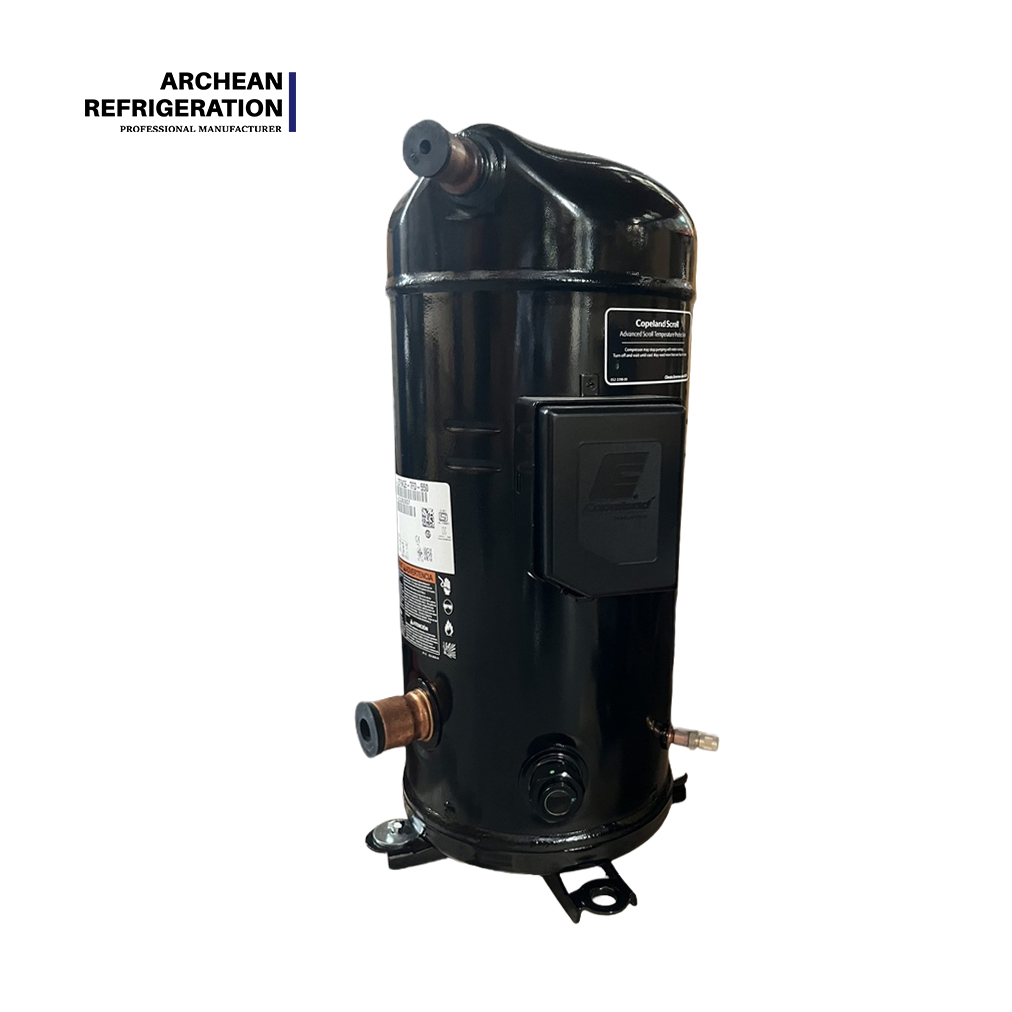
Product reference image. For identification, provide a separate close-up in which every nameplate character is readable.
Record the compressor model and serial number separately from the equipment model and serial number. Both can be useful: the compressor label identifies the component, while the equipment documentation helps establish its original application.
If part of the label is damaged, mark the missing characters as unknown. Do not guess from a similar-looking compressor or an online photograph.
Include every letter, number, hyphen, and suffix. A shortened model reference can omit information needed to identify the electrical version or product configuration.
For example, Archean lists a Copeland ZB114KQE-TFD-550 compressor. For an inquiry, provide that complete reference rather than only “ZB114” or “15 HP.”
Do not apply one universal decoding chart to all Copeland compressors. Model structures and code meanings differ between families. Verify the exact model through the relevant manufacturer documentation.
The model identifies a product configuration; the serial number supports identification of the individual compressor. Include it when asking about production information, service records, or traceability.
Serial-number formats can vary. Confirm date information through the applicable manufacturer reference rather than assuming that the first characters always represent the same year or month.
Copeland’s Online Product Information resource provides access to specifications, application bulletins, and cross-reference information.
Voltage alone does not establish electrical compatibility. Read voltage, phase, and frequency together, and preserve any separate rating rows shown on the label.
If a compressor has different ratings for 50Hz and 60Hz, do not combine the voltage from one row with the current from another. A voltage range also does not mean the compressor is suitable for every supply or control arrangement.
Field | Meaning | Buyer Check |
|---|---|---|
V / Voltage | Specified electrical supply rating. | Match the applicable supply and manufacturer requirements. |
PH / Phase | Single-phase or three-phase supply designation. | Confirm the actual supply and starting arrangement. |
Hz | Rated supply frequency. | Use the voltage and current data associated with that frequency. |
RLA | Rated load amperes. | Treat it as a rating reference, not a prediction of current under every operating condition. |
LRA | Locked rotor amperes. | Do not interpret it as normal running current or use it alone to choose a breaker. |
MCC, where provided | Maximum continuous current. | Check its definition and application in the specific product documentation. |
Actual operating current changes with system conditions. A current measurement should be assessed alongside voltage, refrigerant, operating temperatures, loading, and manufacturer performance data.
Copeland publishes guidance on compressor current ratings. Do not assume one RLA-to-MCC conversion applies to every product or rating basis.
Electrical protection, conductor sizing, and control settings require the equipment instructions and applicable requirements. A single compressor nameplate value is not a complete electrical design.
A model may contain a nominal capacity designation, but this is not a guaranteed cooling output under all conditions. Compare capacity at the required refrigerant, evaporating temperature, condensing temperature, and specified rating conditions.
Likewise, two compressors with similar horsepower or external dimensions are not automatically interchangeable. Check the approved operating envelope, connections, mounting, motor protection, and accessories.
Archean’s article on Copeland ZR and ZB series differences provides additional application context. Confirm the exact model rather than relying only on the series name.
Record refrigerant or lubricant information if it appears on the label. If it is absent, obtain the approved data for the complete model. A refrigerant name alone does not establish suitability for every application or retrofit.
A label photograph also cannot establish authenticity by itself. Compare the compressor, packaging, purchase documents, and available traceability records. Do not assume that one logo, sticker, or hologram is a universal authenticity test across all manufacturing periods and markets.
Before contacting a supplier, prepare the following information:
A clear close-up of the complete compressor nameplate.
The full model number and serial number typed exactly as shown.
The equipment model and its nameplate photo.
Actual supply voltage, phase, and frequency.
The refrigerant and application, such as cold storage, a chiller, or air conditioning.
Photos of connections, mounting, terminal box, and installed accessories.
Whether you need an exact replacement or a technically reviewed alternative.

Include a full compressor view alongside the readable nameplate close-up when requesting a replacement.
Request the proposed complete model reference and relevant technical data. If the quoted suffix differs from the original, ask what changes and why the alternative is suitable.
You can review Archean’s Copeland compressor range and compressor manuals and resources, then submit the identification information for a project-specific discussion.
A: No. The model identifies the product configuration, while the serial number supports identification of the individual compressor. Record both separately.
A: No. Confirm the complete model, electrical ratings, refrigerant approval, capacity at the required conditions, connections, mounting, and protection requirements.
A: No. RLA is a rating reference. Measured current depends on operating conditions and must be assessed using the relevant technical data.
A: No. Use the nomenclature documentation for the relevant compressor family. Preserve every suffix when requesting identification or a quotation.
A: Provide the equipment identification, purchase records, any readable characters, and clear compressor photos. Ask for technical identification support rather than guessing the missing data.


