


+86-15339975475
info@archeanref.com
info@archeanref.com
+8615339975475
Wutongli, linyi, Shandong, China


Views: 0 Author: Site Editor Publish Time: 2026-10-20 Origin: Site


Facing a tough choice for your next compressor upgrade? HVACR professionals, field technicians, and facility managers frequently encounter a critical dilemma. You must select the precise replacement model from the vast Scroll Compressor Series. Picking the wrong unit will inevitably compromise your entire cooling infrastructure.
At first glance, these two compressor models appear virtually identical. They share the same robust black exterior. They utilize identical mounting footprints across many capacity ranges. They both rely on legendary scroll technology. Beneath that heavy-duty steel shell, however, their internal engineering and intended field applications diverge completely.
You must make an empirical purchasing decision. Choosing the precise unit dictates the overall efficiency, operational lifespan, and safety of your system. Installing a mismatched model leads directly to catastrophic system failure, voided warranties, and massive financial loss. This technical guide breaks down exactly how these two powerhouses differ. You will discover their application limits and gain a definitive framework to execute a flawless installation.
Understanding the fundamental mechanical distinctions between these two architectures is absolutely critical. Making an informed decision ensures optimal system performance and prevents premature bearing wear. Here are the core engineering principles to keep in mind:
Application Focus: One architecture is engineered specifically for Air Conditioning and heat pump applications. The other is purpose-built for the grueling demands of medium to high-temperature commercial refrigeration.
Temperature Envelopes: Comfort cooling units operate at peak efficiency when handling higher evaporating temperatures. Refrigeration lines are heavily reinforced to safely endure the significantly lower temperature ranges required for preserving perishable goods.
Refrigerant Compatibility: Modern optimizations differ drastically. Refrigeration models are calibrated for dense gases like R404A and R407F. Comfort cooling models are tailored for lighter refrigerants like R407C and R134a.
Internal Design: Despite external visual similarities, their internal pressure ratios and motor cooling mechanisms are vastly different. These specialized internal geometries mean that these two compressor types are absolutely not interchangeable in the field.
When evaluating commercial climate control and cold chain systems, scroll technology remains the undisputed industry standard. For decades, it has pioneered advancements that prioritize unwavering durability, lower vibration emissions, and high isentropic efficiency. Traditional reciprocating compressors rely on pistons and reed valves that are highly susceptible to mechanical fatigue. In contrast, scroll compressors offer a drastically smoother and more reliable operation.
The core mechanical advantage lies in a unique design utilizing two interleaved scroll members. One scroll remains stationary while the other orbits. As the orbiting scroll moves in a continuous circular path, it draws low-pressure refrigerant gas into outer pockets. It forces this gas toward the center while compressing it, finally discharging it at high pressure. This fluid compression cycle eliminates the need for complex suction and discharge valves. Consequently, it drastically reduces the number of moving parts that can shatter under stress.
Furthermore, this specific scroll technology features radial and axial compliance. This brilliant engineering tweak allows the scroll members to separate slightly if liquid refrigerant or system debris accidentally enters the compression chamber. Both models are highly resistant to liquid slugging, which is a notorious cause of catastrophic failure in other compressor types. Nevertheless, despite sharing this robust foundational technology, proper selection remains your most important task. Mismatching the equipment to an application forces the unit to operate outside its designed thermal limits. This error will inevitably melt the internal motor windings.
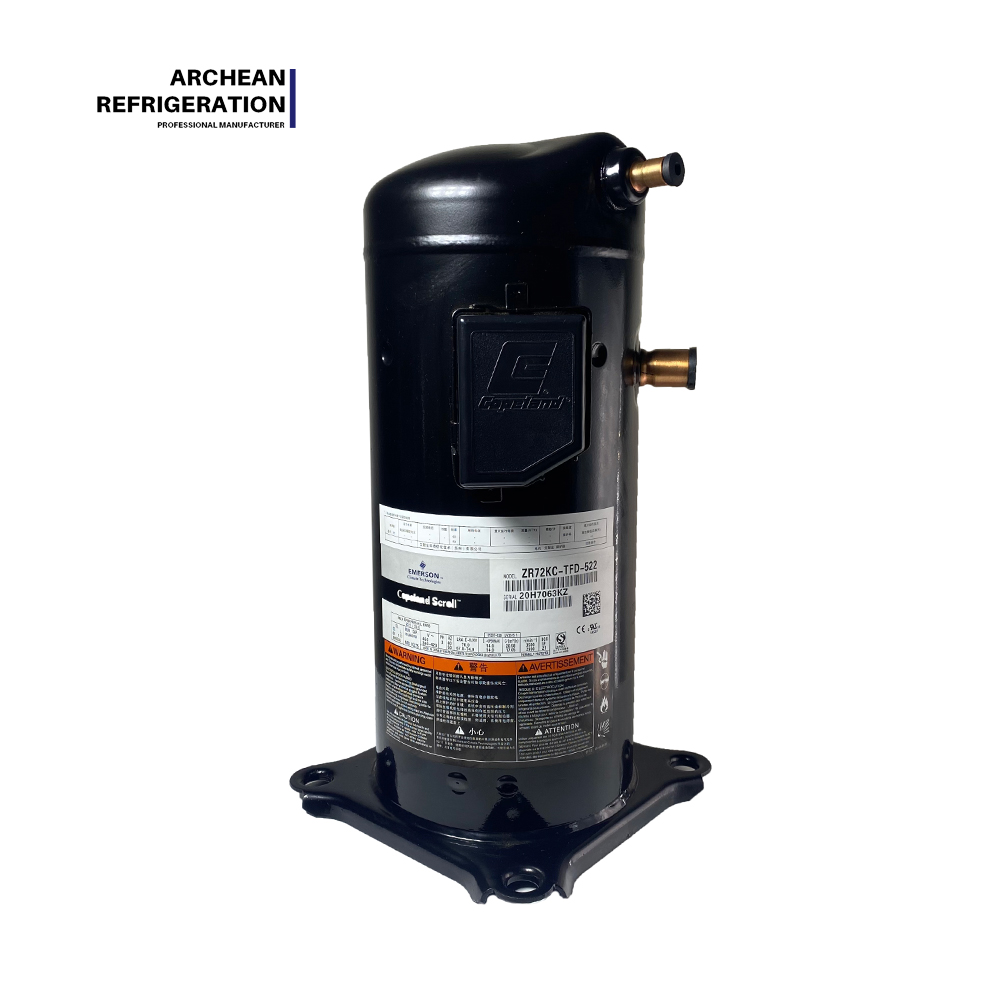
Recognized globally as the flagship workhorse for comfort cooling, the Copeland ZR dominates residential air conditioning, commercial rooftop units, and industrial water chillers. Its internal geometry is meticulously machined for high evaporating temperatures. These units thrive in environments where the evaporating temperature remains above 0 degrees Celsius. In these specific applications, your primary goal is cooling a space to a comfortable room temperature. This requires moving a massive volume of relatively warm refrigerant gas.
Because the returning suction gas in a standard air conditioning system is dense and abundant, the internal motor relies heavily on this high mass flow to dissipate its own electrical heat. If you starve this unit of this specific gas flow, the internal thermal overload protector will quickly trip.
To achieve maximum volumetric efficiency in comfort cooling environments, this series is engineered to pump specific refrigerants. Take industry staples like the factory-direct ZR61KC-TFD, ZR68KC-TFD, ZR72KCE-TFD, and ZR81KC-TFD as prime examples. These units typically operate on a robust 380 to 420V three-phase power supply. Today, these compressors are most commonly paired with R407C, R134a, and modern drop-in replacements. The internal Teflon seals, scroll profiles, and Polyolester lubrication requirements are specifically calibrated to remain chemically stable when interacting with these specific gases.
The standout benefit here is a superior Coefficient of Performance under standard air conditioning conditions. This delivers exceptional cooling capacity per watt of electricity consumed. Additionally, these models feature remarkably low vibration levels. This makes them ideal for rooftop commercial units or residential split-systems where noise pollution must be kept to an absolute minimum. They also come equipped with advanced built-in motor protection mechanisms. These sensors monitor internal temperatures and interrupt the electrical circuit long before a restricted airflow scenario can destroy the compressor.
While its sibling is built for human comfort, the ZB Series is strictly tailored for the rigorous and unforgiving demands of commercial refrigeration. Walk-in coolers, supermarket display cases, agricultural cold rooms, and dairy cooling tanks rely heavily on this heavy-duty architecture. These environments require your system to maintain product temperatures well below ambient conditions. This forces the compressor to handle much lower evaporating temperatures, often plunging down to negative 20 degrees Celsius.
At these lower temperatures, the returning refrigerant gas is incredibly thin and less dense. A standard comfort-cooling compressor would rapidly overheat because there simply is not enough gas mass to cool the internal motor. This specialized architecture is engineered to operate safely under these exact sparse-gas conditions without suffering thermal breakdown.
Refrigeration systems demand refrigerants possessing distinct thermodynamic properties. Consequently, this series is optimized for heavy-duty refrigeration-grade gases. The most notable examples include R404A, R507, and R407F. While there is some minor overlap regarding legacy gases, the performance curves are uniquely calibrated to maximize efficiency when moving dense refrigeration gases. Utilizing the correct refrigerant ensures proper oil return to the crankcase. This prevents the mechanical seizing that plagues mismatched and poorly piped systems.
Commercial refrigeration is a relentless necessity. A single mechanical failure can result in thousands of dollars in spoiled inventory overnight. To combat this, the design features a highly robust internal structure built to withstand continuous operation and significantly higher pressure ratios. The scroll profiles are physically modified to prevent over-compression. Over-compression is a frequent issue when pushing gases from very low suction pressures to high discharge pressures. These units also offer excellent part-load efficiency, consuming far less power during cooler night hours when the refrigeration load drops.
Every compressor possesses an operating envelope. This is a predefined range of suction and discharge pressures within which the machine functions safely. The comfort-cooling envelope is designed for a narrow pressure ratio. If you force it to run at the low suction pressures required by a commercial freezer, the mass flow of the returning gas drops drastically. Without enough cool returning gas, the internal oil loses viscosity, and the bearings seize. In contrast, the refrigeration envelope is designed for a wide pressure ratio. If installed in a standard air conditioning unit, it experiences a higher mass flow than intended. While it may not overheat immediately, it suffers from severe over-compression, drawing excessive amperage and inflating utility bills.
To accommodate their specific workloads, the internal geometries vary significantly. Refrigeration-focused compressors often feature modified discharge valve setups and specialized internal baffling. This clever design ensures that the sparse, cold returning gas is directed efficiently over the motor windings before ever entering the scroll compression chamber. Comfort-cooling models boast simpler internal flow paths because the sheer volume of returning gas naturally provides abundant ambient cooling.
Understanding the theoretical differences in application parameters highlights exactly why cross-installation is a critical engineering error. We can break down the operational realities into a clear comparison.
Technical Parameter | Comfort Cooling Architecture | Commercial Refrigeration Architecture |
|---|---|---|
Target Evaporating Temp | Above 0 degrees Celsius | Down to negative 20 degrees Celsius |
Typical Pressure Ratio | Low to Moderate | Moderate to High |
Motor Cooling Dependency | Relies on high mass flow of suction gas | Optimized for low mass flow environments |
Failure Risk if Swapped | Motor burnout due to lack of cooling gas | Over-compression and excessive power draw |
Beyond basic mechanical differences, modern HVACR professionals must factor in the rapidly evolving regulatory landscape. Across the globe, stringent environmental policies are aggressively phasing down high Global Warming Potential refrigerants like R404A and legacy R22. This industry-wide shift is forcing facility managers to transition toward eco-friendly alternatives like R448A, R449A, and advanced mildly flammable A2L refrigerants.
This transition directly impacts your compressor selection. Manufacturers are continuously updating their scroll lineups to handle the unique discharge temperatures and glide characteristics of these new sustainable blends. Consequently, selecting a compressor is no longer just about matching cooling capacity. It requires ensuring the internal seals, the specified Polyolester oil formulations, and the thermal protection modules are fully certified for next-generation gases. Staying ahead of these trends ensures compliance, avoids future retrofit penalties, and guarantees that newly installed equipment will not become obsolete prematurely.
Selecting the correct unit requires a methodical assessment of your system parameters. Relying merely on physical appearance or horsepower ratings is a guaranteed path to failure. First, definitively identify the application. What is the target temperature of the space or product? If you are cooling a commercial office building or operating an industrial water chiller, you need the ZR Series. If you are storing perishable food or running a walk-in cooler, the refrigeration-specific model is absolutely required. Next, calculate the exact cooling capacity required to select the correct displacement size.
If you are replacing a failed heart in an older legacy system, retrofitting is likely on the horizon. Both series offer models compatible with modern drop-in replacements, but extreme vigilance is required. You must ensure that the factory oil charge inside the new compressor matches the specific retrofit gas. For instance, transitioning to a modern HFC blend mandates a compressor equipped with Polyolester oil rather than traditional mineral oil. Always consult the manufacturer nomenclature plate to verify the oil type before you pull out the brazing torch.
While the upfront cost of commercial compressors represents a significant capital expenditure, the Total Cost of Ownership is dictated entirely by energy efficiency and lifespan. Attempting to save a few dollars by installing a repurposed or incorrectly specified compressor into a refrigeration rack will result in catastrophic failure. The compounding costs of emergency midnight repairs, lost inventory, and purchasing a second replacement unit will instantly dwarf any initial savings. Procuring the exact right model ensures optimal energy consumption and a lifespan that easily exceeds a decade.
This architecture thrives in environments focused on human comfort and industrial process cooling where temperatures remain relatively mild.
Commercial Rooftop Units: Large office buildings and sprawling retail spaces rely on multiple high-capacity scroll compressors. These are housed within rooftop units to maintain a steady indoor climate during brutal summer heatwaves.
Residential Heat Pumps: Highly effective in split-systems, they provide reliable cooling in the summer and reverse the cycle to extract ambient heat for efficient winter warming.
Industrial Water Chillers: Manufacturing facilities utilize them in chiller systems to cool process water. This is a strict necessity for heavy machinery cooling or plastic injection molding.
The Copeland ZB serves as the invisible backbone of the food service and perishable goods industries. Maintaining strict cold chain integrity is non-negotiable in these sectors.
Restaurant Walk-In Refrigerators: Bustling commercial kitchens rely on these units to hold bulk food inventory at safe temperatures. This forces the equipment to handle much lower evaporating temperatures than standard air conditioning.
Supermarket Display Racks: Open-air refrigerated cases displaying dairy, meat, and produce utilize multi-compressor racks. They maintain consistent low temperatures despite constant exposure to fluctuating ambient store air.
Agricultural Cooling: Dairy farms deploy them to rapidly bring the temperature of milk down in holding tanks immediately after extraction. This halts bacterial growth instantly.
Proper lubrication is the absolute lifeblood of any scroll compressor. The type of oil required depends entirely on the refrigerant used. Modern HFC refrigerants require Polyolester oil. This specific oil is highly hygroscopic, meaning it aggressively absorbs moisture straight from the ambient air. Technicians must exercise extreme caution during installation. Keep the system sealed as long as possible and utilize high-quality liquid-line filter driers. This captures any rogue moisture before it creates system-destroying acid.
To fiercely protect your capital investment, you must strictly monitor system superheat and subcooling. Grab your digital manifold gauges and dial in the exact superheat. This prevents liquid refrigerant from flooding back into the compressor. Flood-back instantly washes away the protective oil film on the scroll flanks, causing violent mechanical seizing. Conversely, excessively high superheat starves the compressor of vital cooling gas, leading directly to motor burnout. Ensuring pristine airflow across both the condenser and evaporator coils through regular preventative maintenance is mandatory.
The golden rule of HVACR replacement is simple. You must match the machine to the mission. One architecture is masterfully tuned for air conditioning, heat pumps, and water chillers. In contrast, the other architecture is heavily fortified to handle the grueling, low-temperature demands of commercial refrigeration. While both belong to the highly reliable scroll family and may look identical on a supply house shelf, their internal geometries are highly specialized.
Never base a purchasing decision solely on horsepower or pipe fitting sizes. Always verify your system specifications. When you are ready to secure the exact match for your infrastructure, explore the full range of factory-direct options at Archean HVACR to protect your investment. Choosing correctly not only saves thousands in utility bills but guarantees your system runs flawlessly for years to come.
Generally, no. While a field technician might physically braze it in and get it to run temporarily, it is fundamentally not designed for the low evaporating temperatures inherent to refrigeration. It will lack the dense return gas needed for internal cooling. This inevitably causes it to overheat, suffer from severe oil return issues, and fail prematurely due to extreme thermal stress.
The naming convention provides a clear blueprint of the unit capabilities. The first letter indicates Scroll technology. The second letter defines the application. An R stands for Air Conditioning, and a B stands for Medium to High-temperature commercial refrigeration. The subsequent numbers indicate the nominal cooling capacity, usually in BTU per hour, followed by specific electrical phase and voltage wiring codes.
Often, yes. Models with similar horsepower output frequently share the exact same physical footprint, height dimensions, and copper piping connection locations. While this makes the physical swap straightforward, it acts as a dangerous trap for inexperienced technicians. You must still strictly match the application type, regardless of how perfectly the baseplate lines up.
The necessary lubricant depends entirely on the refrigerant running through the copper lines, not just the compressor family. Systems utilizing legacy gases typically require Mineral or Alkylbenzene oil. Conversely, systems utilizing modern HFCs demand Polyolester oil. Always verify the specific data plate or the manufacturer engineering guidelines before adding a single drop of oil.
The system will run, but it will suffer from severe over-compression. Refrigeration models are built for high pressure ratios. In a standard comfort cooling setup, the compressor pushes against pressure ratios it was not optimized for. This leads directly to excessive amperage draw, poor system efficiency, and inflated utility bills.
You must read the original factory nomenclature plate located on the side of the compressor shell. Pay close attention to the exact model number, the cooling capacity, the voltage code, and the required refrigerant type. Never guess the replacement model based on the physical size or shape of the black steel shell.


