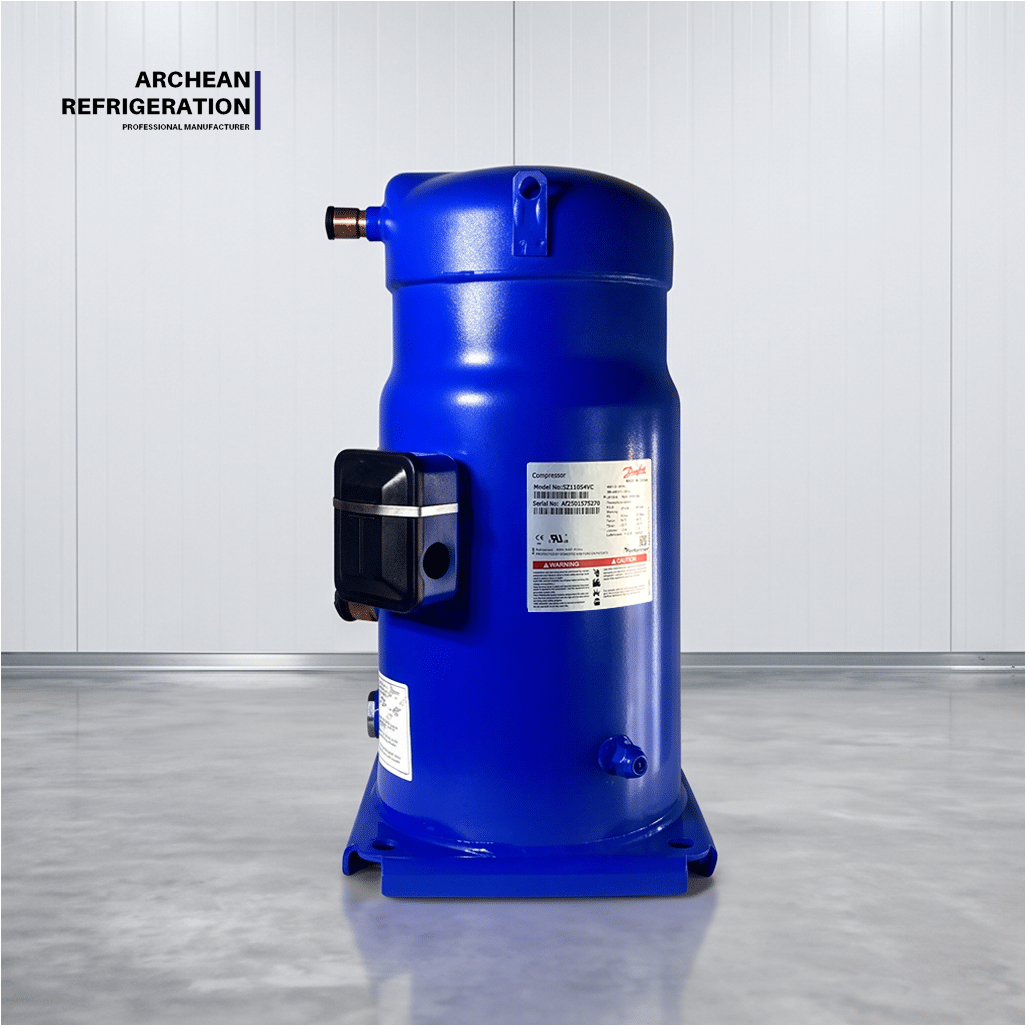
Introduction
In the actual operation of
refrigeration systems, compressors do not run continuously. Sometimes they stop normally (e.g., after reaching the set temperature), and sometimes they shut down abnormally due to various protection mechanisms being triggered. For foreign trade buyers in the refrigeration equipment industry, understanding the various reasons why
compressors stop running can help not only in specifying the correct technical requirements during procurement but also in quickly diagnosing problems during after-sales service, thereby improving customer satisfaction.
This article systematically categorizes the reasons why refrigeration compressors stop running, covering normal shutdowns, protection device activations, and fault-related shutdowns, providing a comprehensive reference guide for buyers.
1. Normal Shutdown: The Regular Rhythm of System Operation
1.1 Reaching the Set Temperature
The most common reason for
compressor shutdown in a refrigeration system is that the thermostat has reached the set temperature. When the temperature inside the cold storage room or conditioned space drops to the preset value, the thermostat sends a signal to cut off power to the compressor, causing it to stop. This is part of a normal start-stop cycle and contributes to energy-efficient operation.
1.2 Timed Defrosting
In cold storage rooms and freezing systems, frost accumulation on the evaporator coils reduces heat exchange efficiency. The system will periodically enter a defrost mode, during which the
compressor pauses its operation. Once defrosting is complete, the compressor restarts.
1.3 Anti-Short Cycle Delay
To prevent damage caused by frequent starting and stopping, most refrigeration systems incorporate an anti-short cycle delay. After the compressor stops, it typically must wait for a specific period (e.g., a preset 10 minutes) before it can restart. This is a normal protective shutdown, not a malfunction.
2. Protection Device Activation: The System's "Safety Guards"
Refrigeration compressors are equipped with multiple protection devices. When these devices detect abnormal operating conditions, they automatically trigger a shutdown to protect the compressor from more severe damage. This is the most common cause of abnormal shutdowns.
2.1 High Discharge Temperature Protection
When the compressor's discharge temperature exceeds the safe upper limit, the temperature protection device activates, forcing the compressor to stop.
Taking Copeland scroll compressors as an example, their ZB series is equipped with an ASTP (Advanced Scroll Temperature Protection) device. This device installs a temperature-sensitive snap-action disc inside the compressor. When the discharge gas becomes excessively hot, the disc actuates, separating the scroll sets and stopping suction and discharge. Subsequently, the motor protector trips, completely shutting down the compressor. Resetting the ASTP usually takes a considerable amount of time, potentially over an hour, depending on the internal heat and cooling efficiency of the compressor.
Common triggers include:
-
Refrigerant leakage, reducing the system mass flow rate and motor cooling.
-
Poor condenser heat dissipation.
-
Excessive system load.
2.2 High Discharge Pressure Protection (High-Pressure Protection)
When the system's discharge pressure exceeds the safety threshold, the high-pressure switch activates, cutting off power to the compressor.
For Copeland ZB58~ZB114 series scroll compressors, although they do not have a built-in pressure relief valve, the system should be configured with a high-pressure switch set to activate at a pressure not exceeding 30 bar (gauge pressure). Once the pressure surpasses this limit, the high-pressure switch immediately triggers a shutdown.
Common triggers include:
-
Poor condenser ventilation or air short-circuiting.
Overcharging of refrigerant.
Blockage in the system piping.
2.3 Low Suction Pressure Protection (Low-Pressure Protection)
When the suction pressure drops below a preset value, the low-pressure protection switch activates, shutting down the
compressor. The low-pressure setting is typically 0.6 to 1.0 bar below the design evaporation pressure.
Common triggers include:
-
Refrigerant leakage or undercharging.
-
Improper adjustment or blockage of the expansion valve.
Excessive frost buildup on the evaporator.
2.4 Motor Overload Protection
When the current drawn by the compressor motor exceeds its rated value, the overload protector (thermal relay or internal overload protector) disconnects, stopping the compressor.
Common triggers include:
-
Low supply voltage or unbalanced three-phase voltage.
High discharge pressure increasing motor load.
Seizure or binding of compressor moving parts.
It is important to note that the recovery time after an overload protector trips is often long, preventing the compressor from restarting immediately.
2.5 Oil Differential Pressure Protection
For compressors equipped with an oil pump, the system monitors the differential pressure between the oil inlet and outlet. When this differential pressure falls below a safe threshold, indicating insufficient lubrication or abnormal oil supply, the system forces a shutdown to prevent wear on bearings, shaft seizure, or even motor burnout.
Common triggers include:
-
Dirty lubricating oil, clogged oil filter.
Poor oil return in the system, oil being carried into the system.
Oil pump failure.
2.6 Phase Sequence and Phase Loss Protection
Three-phase powered compressors are equipped with a phase sequence protector. Its two main functions are:
1.Preventing reverse rotation due to incorrect phase sequence.
2.Preventing single-phasing (phase loss).
If a phase loss occurs while the compressor is running, it may continue to operate but will draw a very high load current, causing the motor windings to overheat rapidly and triggering thermal protection shutdown. The supply voltage variation should not exceed ±10% of the rated voltage, and the voltage imbalance between phases should not exceed 5%.
3. Fault-Related Shutdowns: The Compressor's Own "Health Problems"
Beyond protection device activation, faults within the compressor itself can also lead to shutdown.
3.1 Liquid Slugging (Liquid Compression)
Liquid slugging is one of the most damaging faults for a compressor. When liquid refrigerant enters the compressor, because liquids are incompressible, extremely high lateral shear forces are generated within the compression chamber. This can shatter the scroll wraps or seize the compressor. Fragments of broken parts falling onto the motor can also cause short circuits and motor burnout.
Three common forms of liquid ingress:
-
Slugging: A large amount of liquid refrigerant and/or lubricating oil enters the compressor in a short period.
-
Floodback: Liquid refrigerant continuously returns to the compressor along with the suction gas.
-
Flooded Start: Refrigerant migrates to the compressor during the off-cycle, causing liquid slugging upon startup.
Common triggers:
-
Evaporator fan failure or blocked piping.
-
Excessive refrigerant charge.
-
Improperly adjusted expansion valve.
3.2 Oil Starvation and Poor Oil Return
Compressors rely on lubricating oil to lubricate all moving parts. When the system experiences poor oil return, the compressor cannot deliver sufficient oil to the lubrication points. This leads to increased friction, ultimately causing bearing sleeve burnout or even seizure.
Common triggers:
-
Piping installation lacks proper oil traps.
Long piping runs with significant elevation differences without adding extra lubricating oil.
System leakage leading to oil loss.
3.3 Refrigerant Starvation (Undercharge)
When the system has insufficient refrigerant, the compressor operates in a starved state. The temperature at the center of the orbiting and fixed scrolls rises sharply. This can melt the tip seals, and in severe cases, cause the compressor to seize or rupture.
3.4 Vacuum Operation
Operating a compressor under vacuum conditions is extremely dangerous. In this state, the temperature at the center of the scrolls rises rapidly. Tip seals melt, causing internal leakage. The scrolls expand due to heat, and in severe cases, the compressor seizes. It is strictly forbidden to use a compressor as a vacuum pump.
3.5 System Contamination
Foreign materials like welding debris, moisture, etc., entering the system can cause issues such as bearing seizure, insulation failure, and copper plating in the compressor.
3.6 Compressor Locked Rotor or Seized Bearings
When the internal moving parts of the compressor lock up, the starting current spikes abnormally, triggering locked rotor protection and shutting down the compressor.
4. External Factors Causing Shutdown
4.1 Power Supply Issues
-
Power outage: Interruption of the main power supply.
Blown fuse or tripped circuit breaker.
Voltage too high or too low: Outside the permissible range for the motor.
4.2 High Ambient Temperature
When the ambient temperature around the outdoor unit is excessively high, the condensing pressure rises, potentially triggering high-pressure protection shutdown.
4.3 AC Contactor Failure
The AC contactor is a critical component in the motor control circuit. Contactors with underspecified ratings or poor quality can suffer from contact chatter, welding, or even breakage. This can lead to single-phasing of the motor or frequent starts/stops, eventually causing protective shutdown or motor damage.
5. Shutdown Situations Specific to Scroll Compressors
Some unique shutdown causes apply specifically to scroll compressors:
5.1 Reverse Rotation
When a scroll compressor rotates in the wrong direction, high-pressure gas gets trapped between the scroll elements, potentially pushing the scroll components in reverse. The system uses the phase sequence protector to immediately cut off power.
5.2 ASTP Temperature Protection (Copeland Specific)
As mentioned earlier, Copeland ZB series scroll compressors feature the ASTP (Advanced Scroll Temperature Protection) device. When the discharge temperature gets too high, the scrolls separate, stopping suction and discharge, followed by the motor protector tripping.
5.3 Internal Pressure Relief Valve (IPR Valve) Activation
Copeland ZB15~48 series compressors have an internal pressure relief valve (IPR valve) located between the high-pressure side and low-pressure side. When the pressure difference exceeds 26~32 bar, the IPR valve opens. The hot discharge gas contacts the sensing element of the motor protector, triggering a shutdown.
6. Procurement and Usage Recommendations for Buyers
Considerations During Procurement
Verify Protection Device Configuration: Ensure the selected compressor model is equipped with necessary protection devices (high/low-pressure protection, overload protection, phase sequence protection, etc.).
Pay Attention to Voltage Compatibility: Confirm that the compressor's rated voltage matches the grid standards of the target market. Three-phase voltage imbalance should be controlled within 5%.
Choose Reliable Brand Contactors: The rated current of the contactor must not be lower than the compressor's nameplate rated current. Poor-quality contactors are a common cause of motor damage.
Confirm Refrigerant Compatibility: Ensure the compressor is compatible with the type of refrigerant used in the target market.
Recommendations for Installation and Use
Ensure System Cleanliness: Prevent foreign materials and moisture from entering the system during installation.
Correctly Charge Refrigerant and Lubricating Oil: Avoid overcharging or undercharging.
Ensure Good Ventilation: The condenser needs adequate space for heat dissipation. Clean it regularly.
Install Oil Traps: Set up proper oil traps in the piping layout to ensure normal oil return.
Prohibit Vacuum Operation: Strictly forbid using the compressor as a vacuum pump.
Wait Before Restarting: After the compressor stops, allow sufficient time (typically over 10 minutes) before restarting to avoid frequent cycling.
Conclusion
The reasons why a refrigeration compressor stops running are diverse, ranging from normal thermostatic control shutdowns to safety shutdowns triggered by protection devices, and abnormal shutdowns caused by faults. For buyers, understanding these causes helps make more informed technical choices during procurement and provides more valuable after-sales support to customers after the equipment is exported.
Choosing brand-name compressors with comprehensive protection features (such as
Copeland , Bitzer , Danfoss , etc.), combined with correct installation and standard maintenance practices, can significantly reduce the probability of abnormal shutdowns, extend equipment lifespan, and create greater long-term value for your customers.


