


+86-15339975475
info@archeanref.com
info@archeanref.com
+8615339975475
Wutongli, linyi, Shandong, China


Views: 0 Author: Site Editor Publish Time: 2026-07-30 Origin: Site


Selecting an R410A scroll compressor requires moving far beyond general brand reputation. You must demand exact technical validation for your specific system architecture. Choosing a unit based solely on basic ratings exposes your business to massive operational risks. Incorrect specification matching pushes equipment outside its approved thermal envelope. This oversight directly causes premature failure, immediately voids factory warranties, and triggers highly expensive facility downtime. Finding the right unit demands strict attention to technical details. This article delivers a rigorous breakdown of the essential specifications, stringent application constraints, and critical supplier evaluation criteria. You will learn how to parse performance curves and assess electrical tolerances. We will explore exactly what specs matter most to help you finalize a confident, data-backed procurement decision. Reading through this guide gives you the engineering insights necessary for long-term reliability.
Engineers often make mistakes when evaluating cooling and heating capacity. You cannot rely on nominal ratings. You must evaluate these metrics at exact design conditions. The Coefficient of Performance (COP) shifts dramatically based on ambient temperatures. A compressor rated for 10 tons nominally might only deliver 8 tons during peak summer heat. You need to map the required kW or BTU against real-world extremes. Properly assessing Copeland ZPD compressor specifications guarantees adequate capacity under peak load. Always use specialized selection software for accurate capacity modeling. Systems rarely operate at peak load all year. You must calculate partial load efficiencies. This ensures your system does not cycle on and off too rapidly. Short cycling damages contactors and increases mechanical wear on the scroll plates.
Voltage discrepancies destroy motors faster than mechanical wear. Verifying exact electrical requirements remains non-negotiable. You must check voltage, phase, and frequency tolerances. A system wired for 380-420V/3Ph/50Hz performs differently than a 460V/3Ph/60Hz setup. Installing a mismatched unit causes overheating and eventual motor burnout. You should also confirm the Maximum Continuous Current (MCC) and Locked Rotor Amps (LRA). These figures dictate proper contactor sizing and breaker selection. Phase imbalance represents another hidden danger. A variance of just two percent between electrical legs causes significant motor heating. You should mandate voltage checks at the contactor during startup. Document these readings to protect your warranty status.
Every compressor model operates within a strictly defined thermal boundary. You must use compressor performance curves to confirm safety limits. The unit must stay within approved evaporating and condensing temperature boundaries. Operating outside this envelope degrades lubricating oil rapidly. High discharge temperatures carbonize the oil, while low suction pressures cause motor cooling failures. Always plot your lowest expected evaporating temperature against your highest expected condensing temperature on the manufacturer's envelope chart. This step proves the unit can survive your local climate extremes.
Commercial installations often face strict noise regulations. Assessing sound power levels is crucial for indoor or rooftop placements. You should review the discharge pulse limits on the spec sheet. Compressors emit specific frequencies during operation. Some units require external sound blankets to meet local ordinances. Review vibration data to specify correct rubber mounting grommets. Rigid mounting increases noise transmission drastically. Compressors typically ship with standard rubber mounts. You might need harder durometer grommets for tandem systems. Review the installation guide to ensure proper torque specs on mounting bolts.
| Validation Area | Nominal Approach (Avoid) | Exact Method (Recommended) |
|---|---|---|
| Capacity | Using catalog horsepower | Calculating BTU at exact design temperatures |
| Voltage | Assuming standard 3-phase power | Matching precise voltage/frequency tags |
| Envelope | Guessing average seasonal temperatures | Plotting worst-case ambient conditions |
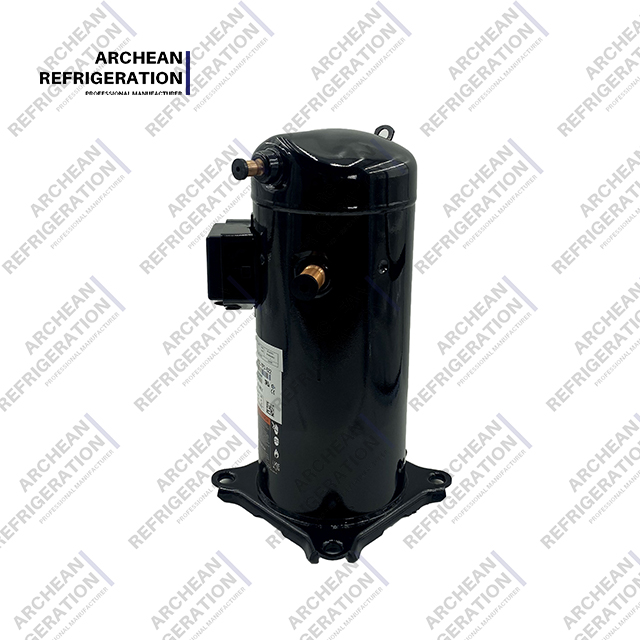
Integrating a heat exchange Copeland ZPD compressor demands precise engineering. Reverse-cycle systems face varying load demands throughout the year. Winter heating requires vastly different compression ratios compared to summer cooling. Reversible systems also utilize four-way valves. Reversing these valves causes sudden pressure equalizations. You must ensure the selected model can handle these transient stress events. Appropriate accumulator sizing protects the scroll spirals from rapid pressure shifts. Engineers must review heat recovery cycles carefully to maintain optimal mass flow rates. Defrost cycles require rapid reversing valve shifts. This action sends a surge of pressure back toward the compressor. Proper suction line sizing acts as a buffer. You must calculate refrigerant velocity to ensure adequate oil return during these low-load periods.
The ZPD series runs exclusively on R410A refrigerant. Strict adherence to R410A properties is absolutely essential. R410A operates at much higher pressures than older refrigerants. You must use system components rated for these elevated pressures. Proper Polyolester (POE) oil management is another critical factor. POE oil is highly hygroscopic. It absorbs moisture from the air very quickly. You must implement strict system cleanliness protocols. Technicians should pull a deep vacuum to remove moisture before charging. Contaminated POE oil forms acids and destroys internal motor windings.
Occasional liquid flood-back happens during defrost cycles. Chillers and heat pumps inevitably face this challenge. You must assess the compressor's radial and axial compliance. Scroll technology naturally offers better liquid handling than reciprocating designs. The scrolls can separate slightly to let liquid pass without shattering. However, continuous liquid slugging still causes catastrophic damage. Follow these safety steps:
Factory part numbers contain vital configuration data. Decoding these Bill of Materials (BOM) codes identifies specific included components. A base Copeland ZPD compressor model number only tells half the story. The BOM suffix dictates the physical trim. It tells you if the unit includes a sight glass, specific mounting feet, or standard terminal boxes. You must match the BOM code exactly when replacing an existing unit. Ignoring the BOM often results in installation delays and mismatched fittings. Some codes specify an IP54 terminal box for outdoor use. Others provide standard indoor boxes. Specifying the wrong BOM forces your technicians to fabricate custom weather shields.
Refrigerant piping connections vary significantly across different BOMs. You must choose between Rotalock threaded connections and brazed stub tubes. Rotalock connections offer excellent serviceability. Technicians can swap compressors quickly without cutting pipes. However, threaded fittings carry a slight risk of slow leaks over time. Brazed stub tubes prevent leaks entirely. They provide a hermetically sealed joint for maximum reliability. Brazing requires hot work permits and nitrogen purging during installation. You must weigh serviceability against absolute leak prevention based on facility rules.
Large-capacity systems often use multiple compressors connected together. Evaluating factory-certified manifolding is crucial for these systems. You might compare a tandem setup against a single high-capacity unit. Tandem and trio configurations offer superior part-load efficiency. One compressor can shut down while the other runs. You cannot simply pipe two standard single units together. OEM-approved manifold kits include specific oil equalization lines. These lines keep oil levels balanced across all running units to prevent starvation.
Complex refrigeration layouts sometimes demand non-standard features. Specifying a custom Copeland ZPD compressor setup solves unique integration challenges. You can request tailored oil sight glasses for easier visual inspections. Schrader valves installed directly on the shell simplify pressure testing. Advanced motor protection modules provide external electronic trip alerts. These specialized fittings add initial expense but reduce troubleshooting time later. You should review your schematic to see if custom modules provide a strategic advantage.
Procurement teams often focus solely on the initial purchase price. This approach creates financial blind spots. You should evaluate returns based on long-term energy consumption. A high-efficiency unit saves massive amounts of electricity over a 10-to-15-year operational lifespan. Evaluating COP at partial loads reveals true performance. Investing in genuine, properly matched equipment lowers monthly power bills. Energy costs dwarf the purchase price over a decade. A compressor running inefficiently consumes thousands of dollars in excess power. You should analyze localized utility rates against COP metrics. High-efficiency models often qualify for utility rebates. These rebates further offset the initial purchase premium.
The global supply chain contains numerous hidden dangers. You must know how to identify genuine factory-new units. Many unauthorized sellers offer remanufactured, grey-market, or outright counterfeit compressors. Grey-market units might lack local voltage certifications. Counterfeit units use inferior internal metals and fail rapidly. You should inspect factory nameplates for correct holograms and serial number formatting. Only trust serial numbers verifiable through the official manufacturer database. Avoiding unverified sources protects your facility from disastrous sudden failures.
Understanding OEM warranty stipulations prevents unexpected repair bills. Manufacturers impose strict rules for warranty validity. You must provide detailed commissioning documentation. This paperwork proves technicians installed the unit correctly. Mandatory safety controls, like high-pressure switches and crankcase heaters, must be present. Running a unit without these controls instantly voids all coverage. You should train your maintenance staff on proper documentation procedures. Clear records ensure smooth warranty claims if mechanical issues arise.
A competent distributor does more than just move boxes. Ensure the supplier utilizes official Copeland OPI (Online Product Information) software. They should generate accurate performance data sheets for your specific design conditions. A reliable Copeland ZPD compressor supplier will flag mismatched specifications before processing your order. They ask questions about your evaporating temperatures and refrigerant type. Avoid suppliers who blindly process part numbers without offering technical validation. Engineering competence separates true partners from basic vendors.
Commercial HVAC failures require immediate action. Assessing the supplier's stock depth is incredibly important. You need to verify they hold specific ZPD models in local warehouses. Deep inventory minimizes catastrophic project delays. Some rare BOM codes require long factory lead times. Transparent suppliers communicate these delays upfront. They might offer a slightly different BOM code as a viable, faster alternative. You should ask about average shipping times and emergency freight options.
The transaction does not end at delivery. Evaluating the distributor's after-sales support ensures long-term success. You need a partner capable of assisting with complex troubleshooting. They should offer oil management analysis and system optimization advice. When a compressor fails, you need help processing warranty claims quickly. Strong engineering support helps identify the root cause of the failure. This prevents the replacement unit from suffering the exact same fate.
Successful procurement relies on aligning exact performance curves with your system demands. You must avoid unverified aftermarket sources to ensure equipment longevity. Correctly matching electrical tolerances and BOM codes eliminates installation delays and premature failures. We highly recommend utilizing official selection software to generate a comprehensive technical submittal. Always review this data thoroughly before issuing a Purchase Order. Your next step is straightforward. Contact a certified distributor to verify BOM availability, confirm current lead times, and validate your design conditions today.
A: The ZPD series is engineered exclusively for R410A refrigerant. It handles significantly higher operating pressures. The ZRD series is designed for legacy refrigerants like R22 and R407C. They utilize different internal scroll geometries and require different oil formulations. You cannot interchange them without causing immediate system failure.
A: You must run your exact design conditions through the official Copeland OPI (Online Product Information) tool. Do not rely on static catalog tables. The OPI software calculates exact cooling capacity, power consumption, and operating limits based on your specific evaporating and condensing temperatures.
A: No. Tandem setups require specific OEM-approved manifold kits. They also rely on precise oil equalization lines to balance lubrication. You cannot field-modify standard single units for tandem operation. You must order specific BOM codes factory-designed for manifolding.
A: The ZPD series requires approved POE (Polyolester) oils designed for R410A. POE oil is highly moisture-sensitive. You must never mix different lubricants, as doing so degrades internal components and causes rapid compressor failure. Always consult the technical manual for exact approved oil brands.


