


+86-15339975475
info@archeanref.com
info@archeanref.com
+8615339975475
Wutongli, linyi, Shandong, China


Views: 0 Author: Site Editor Publish Time: 2026-08-21 Origin: Site


Receiving an incorrect or damaged commercial compressor causes catastrophic facility downtime. You waste critical labor hours and face incredibly heavy reverse-logistics costs. These disruptions threaten operations in any temperature-critical facility. Implementing a rigorous pre-shipment inspection protocol shifts this risk directly back to the vendor. Unfortunately, many procurement teams fail to verify equipment integrity before it leaves the loading dock. This crucial oversight leads to immediate operational failures upon delivery.
We provide facility managers and procurement teams with a skeptical-friendly framework to prevent these issues. You will learn how to verify equipment integrity and ensure strict specification alignment. This guide ensures your unit meets all technical requirements before shipping. By enforcing these pre-shipment rules, you protect your capital investment and eliminate surprise installation delays.
Identifying an incompatible unit after rigging it to a rooftop compounds financial losses exponentially. Rigging heavy commercial equipment requires expensive cranes and specialized crews. Cranes cost thousands of dollars per day. If technicians discover an incompatible unit inside the mechanical room, your maintenance budget bleeds rapidly. You pay for the initial lift, the unit removal, and the eventual replacement lift.
Returning heavy freight involves incredibly complex logistics. Processing freight damage claims takes weeks to resolve. When you reject a unit on-site, standard manufacturing lead times often reset completely. You might face a new three-to-six-week wait for a proper unit. Your facility loses critical temperature control during this entire waiting period. This delay threatens perishable inventory, sensitive server rooms, and occupant comfort.
Incorrect equipment choices create immediate hazards. An incorrect cooling systems refrigeration compressor replacement might introduce incompatible oils to your piping. Polyolester (POE) oils and mineral oils do not mix safely. Mixing them causes severe sludge buildup inside the condenser coils. You also risk incorrect electrical phasing. Reverse phasing destroys a scroll compressor motor in minutes. Mechanical failure upon startup becomes a very real threat when verification steps are skipped.
Your supplier must provide a clear, unedited photo of the physical compressor nameplate. Mandate this step before authorizing any shipment. Do not accept a typed invoice description as proof of specifications. Human error happens frequently during order entry and warehouse picking. Seeing the physical data plate guarantees you receive the exact model ordered.
Electrical matching requires strict attention. Verify Voltage, Phase, Locked Rotor Amps (LRA), and Rated Load Amps (RLA). Check these specific numbers against your existing contactors and breakers. Upgrading a compressor sometimes changes the necessary amp draw. If the new LRA exceeds your breaker limits, the system will constantly trip. You must consult your licensed electrician to confirm these tolerances.
Ensure the refrigeration compressor replacement specifications explicitly list compatibility with your current system parameters. Moving from R-410A to newer refrigerants like R-448A requires specific gasket materials. Lubricant types also matter immensely. POE oil absorbs moisture rapidly from the air. Mineral oil behaves differently under pressure. Verify the exact oil charge type included inside the crankcase.
Confirm the tonnage or BTU output carefully. It must match your original engineering parameters perfectly. Installing an oversized unit causes rapid short-cycling. Short-cycling burns out expensive motors prematurely. Conversely, undersized units fail to cool the space adequately during peak summer loads.
| Specification Category | Target Metric | Verification Method |
|---|---|---|
| Electrical Data | Voltage, Phase, LRA, RLA | Physical Nameplate Photo |
| Chemical Data | Refrigerant Type, Oil Type (POE/Mineral) | Supplier Spec Sheet & OEM Manual |
| Performance Data | Cooling Capacity (BTU/hr or Tons) | Engineering Benchmark Comparison |
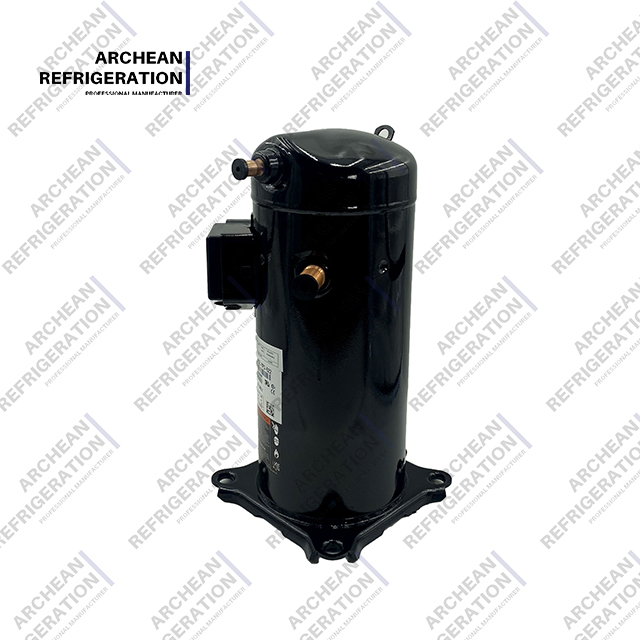
The unit must ship holding a pressurized dry nitrogen charge. This internal pressure prevents moisture intrusion during transit. Moisture destroys internal motor windings and degrades oil quality. Demand visual proof of this charge prior to crating. Ask the vendor for a photo of the attached pressure gauge. Alternatively, request a brief video showing a technician depressing the Schrader valve to release a burst of gas.
Inspect remote photos for securely bolted blank-off plates. These metal plates cover the suction and discharge ports. They protect internal valves from contamination. Check the electrical terminal box closely. Look for any visible cracks or missing protective covers. Broken terminal boxes usually indicate rough handling in the warehouse.
Visual condition matters greatly. When inspecting a remanufactured refrigeration compressor replacement, scrutinize the paint job. Look for high-quality repainting efforts. Overspray on electrical terminals indicates sloppy factory workmanship. Paint on electrical contacts causes poor conductivity and arc faults. You should see zero signs of rust on the crankcase. Mounting feet must also remain entirely rust-free.
Confirm the presence of all necessary mounting hardware. The shipping crate must contain isolation pads. Rubber mounting sleeves and required pipe gaskets must also sit securely inside the box. Missing hardware delays installation by several days while technicians hunt for compatible parts.
Dealing with obsolete OEM models requires extra caution and precise measurements. Request side-by-side dimensional drawings from the engineering department. These drawings should compare the old equipment footprint directly to the new unit. A custom chassis must fit your existing structural rails perfectly. Roof curbs and mechanical room pads rarely offer flexibility for wider bases.
Verify the exact location and diameter of suction and discharge valves. A properly built custom refrigeration compressor replacement must align easily with existing piping. It should not require excessive, on-the-fly pipe brazing by your field technicians. Extensive piping modifications introduce leak points. They also waste expensive labor hours and prolong system downtime.
Confirm the final crated weight and precise center of gravity. Rigging crews rely on these exact specifications to balance the load. You must ensure your onsite rigging equipment can handle the lift safely. An unexpected shift in the center of gravity endangers the rigging crew and the building structure.
Always measure the access doors and elevator dimensions in your facility. A custom unit might fit the mechanical pad but fail to clear a standard doorway. Double-check all spatial constraints before the freight carrier arrives at your loading dock.
Require a signed copy of the electrical and mechanical run-test logs. Factory technicians generate these logs during final assembly. The logs must include proper megger readings and oil pressure tests. Validating Factory Acceptance Test (FAT) documents ensures the unit operates correctly before leaving the factory. Never authorize a freight shipment without reviewing these crucial bench-test documents.
Clarify exactly when the manufacturer warranty begins. Does it start on the date of shipment or the date of field startup? Understand what specific installation documentation your refrigeration compressor replacement supplier requires. Missing startup logs often void warranties immediately. You must protect your capital investment by understanding these legal triggers.
Instruct the supplier to include strict handling indicators on the shipping paperwork. The Bill of Lading (BOL) should boldly state "Do Not Lay Flat" or "Keep Upright". Request ShockWatch indicators placed on the crate exterior. These simple impact indicators prove whether the freight carrier dropped or abused the unit during transit. They make freight claims much easier to win.
Establish a strict payment rule within your procurement team. Do not release the final invoice balance early. Wait until your lead technical team signs off on the vendor's pre-shipment evidence package. Financial leverage remains your best tool for ensuring total supplier compliance.
| Workflow Stage | Required Document | Responsible Party |
|---|---|---|
| Stage 1: Assembly | Bench-Test & FAT Logs | Vendor Engineering Team |
| Stage 2: Packaging | Visual Photo Package & Nitrogen Video | Vendor QA Department |
| Stage 3: Dispatch | BOL with ShockWatch Instructions | Vendor Logistics Team |
| Stage 4: Clearance | Final Sign-Off Approval | Facility Technical Team |
Treat the pre-shipment phase as the final, non-negotiable gate in your procurement process. A trustworthy and professional supplier will welcome a strict inspection checklist. They view it as proof of their own quality control standards. By forcing vendors to provide visual and documented evidence, you protect your facility from catastrophic delays.
Formalize this inspection checklist into your standard operating procedures (SOP) today. Send it to your vendor immediately upon issuing the initial purchase order. Setting these strict expectations early prevents miscommunication. You will secure a seamless installation, protect your warranty, and get your cooling systems running efficiently without surprises.
A: Request a time-stamped video from the vendor briefly depressing the Schrader valve to release a burst of gas, or a photo of an attached pressure gauge reading the factory-specified PSI.
A: It must include a tear-down and rebuild report, bench test results (amp draw, megger test, oil pump pressure), and a clear warranty certificate.
A: Most commercial units ship with a factory-measured oil charge, but this must be verified via the spec sheet. You must always check the sight glass upon arrival and before startup.
A: Minor variations can occur, especially with newer, higher-efficiency models. However, it must be reviewed by your licensed electrician or HVAC engineer to ensure existing breakers and contactors are appropriately sized.


