


+86-15339975475
info@archeanref.com
info@archeanref.com
+8615339975475
Wutongli, linyi, Shandong, China


Views: 0 Author: Site Editor Publish Time: 2026-11-16 Origin: Site


A digital scroll compressor and an inverter compressor can both adjust cooling capacity, but they use different methods. A digital scroll typically alternates between loaded and unloaded states while its motor continues running at normal speed. An inverter system changes compressor motor speed through a matched drive.
The right choice depends on the application, load profile, control system, operating envelope, and service requirements. Neither technology is automatically the better replacement for an existing compressor.
This guide compares digital scroll and inverter-driven scroll systems to help buyers identify the technical information needed before ordering.
In a digital scroll compressor, a controlled unloading mechanism interrupts compression for part of a modulation cycle. The motor continues running during the unloaded period. Changing the proportion of loaded time changes the average delivered capacity.
For illustration, spending half a cycle loaded and half unloaded represents approximately half the full-load capacity over that cycle. This explains the operating principle; it is not a recommended controller setting or a statement that electrical input falls by exactly half.
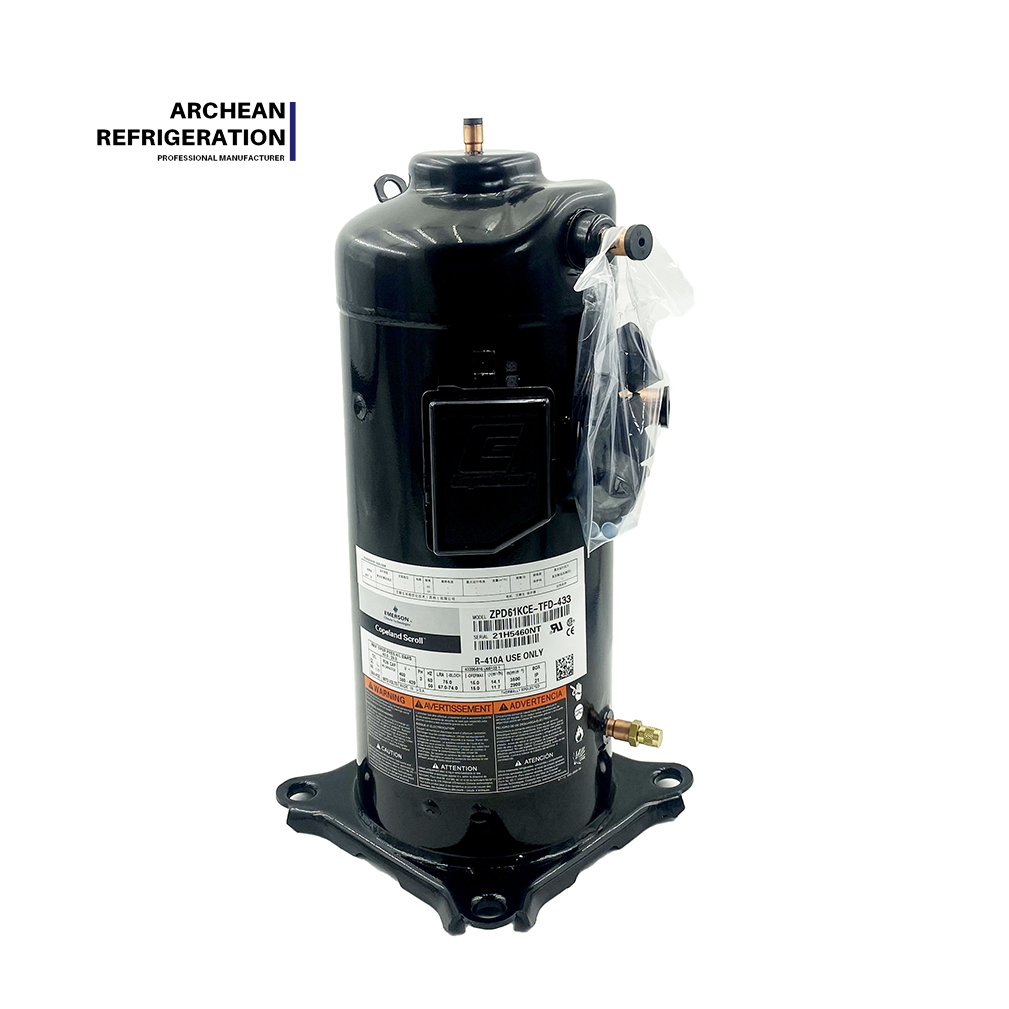
Digital scroll product reference. Confirm the complete model, controller requirements, and approved application before selection.
Digital modulation is different from repeatedly switching the compressor motor on and off. The permitted cycle timing and minimum loaded period must follow the instructions for the exact compressor and controller.
An inverter-driven scroll compressor uses a matched electronic drive to vary motor speed. This changes refrigerant flow and available capacity within the approved operating range.
The drive, motor, control software, and compressor must work as a compatible system. Minimum and maximum speeds, acceleration settings, protection functions, and oil-management requirements are model-specific.
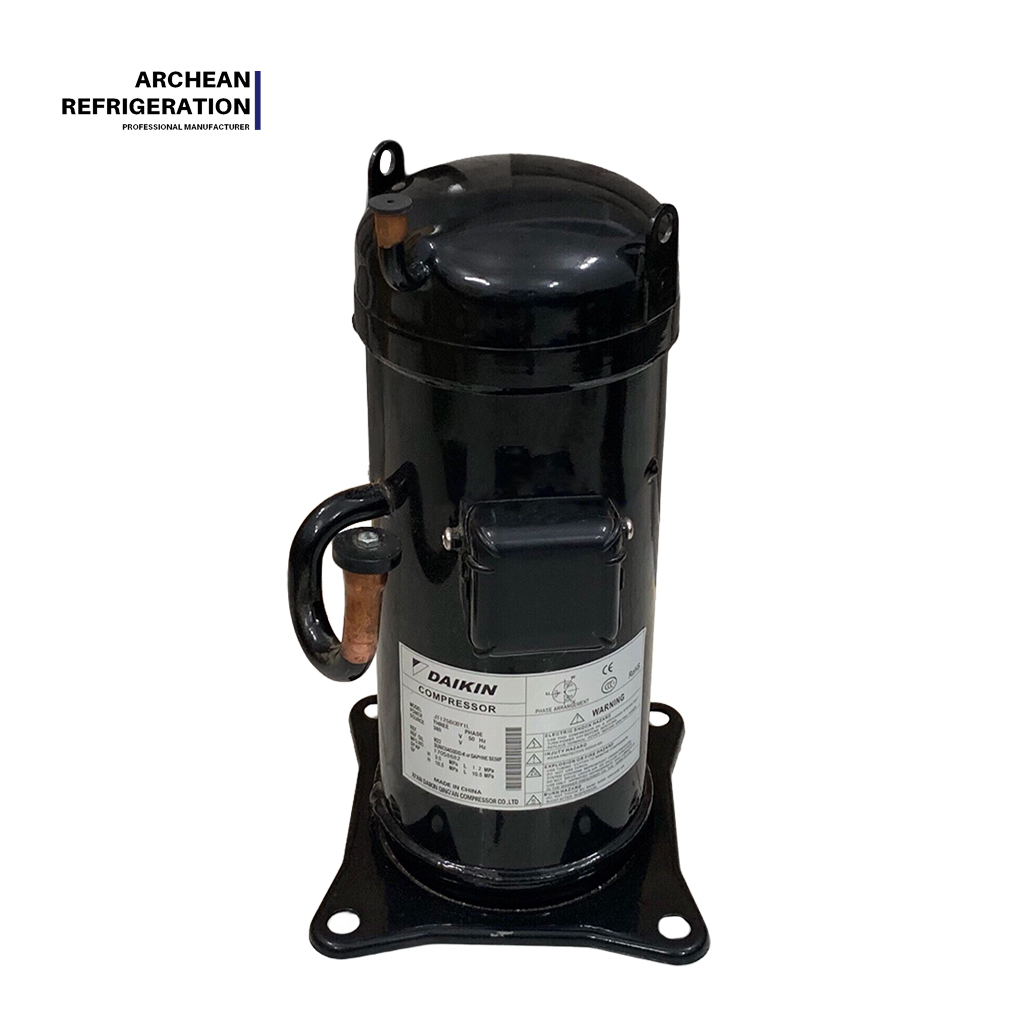
Inverter application product reference. The photograph does not establish drive compatibility or the supplied package contents.
Copeland’s overview of modulating compressor technologies distinguishes digital modulation from variable-speed control. Do not assume that a conventional fixed-speed compressor can accept an added inverter.
Comparison | Digital Scroll | Inverter-Driven Scroll |
|---|---|---|
Capacity adjustment | Changes the proportion of loaded and unloaded time. | Changes motor speed through a matched drive. |
Motor operation | Normally remains at normal operating speed during modulation. | Operates within an approved variable-speed range. |
Control equipment | Requires compatible unloading control and protection. | Requires a compatible drive, control interface, and protection. |
Low-load assessment | Check minimum modulation, pressure response, and valve control. | Check minimum speed, lubrication, cooling, and oil-return provisions. |
Electrical integration | Does not require a motor inverter for digital unloading itself. | Requires drive-related electrical, cooling, and EMC assessment. |
Replacement suitability | Requires an approved compressor and control arrangement. | Requires an approved compressor-drive combination and system review. |
Available capacity ranges differ between products. Do not assume that every digital compressor has the same minimum modulation or that every inverter compressor offers the same speed range.
For digital control principles, consult Copeland’s technical information on controlling digital scroll compressors. Use the current instructions for the selected model when designing the system.
Both technologies can help match output to changing demand. However, a technology label does not establish annual energy consumption.
Compare candidate systems using the same refrigerant, required capacity, evaporating and condensing conditions, and relevant performance assumptions. Include unloaded operation for digital systems and drive losses for inverter systems.
A digital compressor continues to consume power while unloaded. Likewise, an inverter compressor does not necessarily achieve a proportional reduction in input power as speed falls. Use manufacturer performance data rather than assuming a straight-line relationship.
Identify how many hours the equipment operates at high, medium, and low demand. A system that spends most of its time near full load may produce a different result from one operating mainly at reduced load.
Also consider fans, pumps, controls, defrost, and standby consumption. Compare seasonal or annual system performance where suitable data are available, rather than one compressor operating point.
Both approaches can support accurate temperature control when correctly integrated. Results depend on sensors, control tuning, expansion devices, system volume, and load changes.
Digital loading and unloading can produce pressure and sound changes during a cycle. Inverter systems operate across a range of speeds that can interact with piping or structural resonances. Neither approach guarantees quieter operation in every installation.
A digital scroll installation needs compatible unloading controls and compressor protection. An inverter installation needs a compatible drive and control strategy. Confirm the required sensors, electrical interfaces, fault handling, and communication functions.
Ask whether the quotation includes the controller, unloading valve components, drive, wiring accessories, and commissioning documentation. Compressor-only and complete-system quotations are not directly comparable.
For either technology, verify the refrigerant, lubricant, operating envelope, discharge temperature limits, and oil-return provisions. Low-load operation must remain within the manufacturer’s approved conditions.
A digital compressor running at normal motor speed does not remove the need to assess system oil return. A variable-speed system may require specific oil-management routines or operating restrictions. Follow the selected product’s instructions.
Changing technology can affect piping, electrical supply, expansion control, protection, and equipment approval. Confirm the equipment manufacturer’s requirements before replacing a fixed-speed, digital, or inverter compressor with another type.
Archean lists a Copeland ZPD digital scroll compressor and a Daikin compressor for inverter applications. These listings represent different product options, not a claim that the two models are interchangeable.
Start with the application: Define the refrigerant, required temperatures, design capacity, and operating envelope.
Describe demand changes: Provide the expected load range and time spent at reduced demand.
Check existing controls: Identify whether the equipment supports digital unloading, variable-speed operation, or neither.
Request matched components: Confirm the compressor, controller or drive, protection, and accessory references.
Compare complete costs: Include integration, commissioning, energy, service capability, and replacement electronics.
A digital scroll may be worth evaluating where the system is designed around load/unload modulation and compatible controls. An inverter-driven scroll may be worth evaluating where a matched variable-speed platform can meet the operating and efficiency requirements.
Review Archean’s refrigeration compressor range and compressor technical resources, then request data for the complete proposed configuration.
A: No. Digital scroll normally adjusts average capacity through loaded and unloaded periods. An inverter compressor adjusts motor speed through a compatible drive.
A: During normal digital modulation, the motor continues running. Unloading interrupts compression rather than switching the motor off for each modulation cycle.
A: The result depends on the specific compressors, system conditions, controls, and load profile. Compare complete-system performance over representative operating hours.
A: Do not assume this is permitted. Use only an explicitly approved compressor-drive arrangement and follow the manufacturer’s application requirements.
A: Provide the application, refrigerant, design temperatures, capacity range, supply details, existing compressor and controls, and whether the project is new equipment or a retrofit.


