


+86-15339975475
info@archeanref.com
info@archeanref.com
+8615339975475
Wutongli, linyi, Shandong, China


Views: 0 Author: Site Editor Publish Time: 2026-11-23 Origin: Site


A Copeland compressor cross reference helps identify a possible replacement for an existing compressor. It is a useful starting point, but buyers must also review the application, electrical supply, performance data, controls, and installation requirements.
A matching horsepower rating or similar model number does not establish compatibility. Even when a manufacturer’s tool identifies a replacement, any accompanying notes, accessory requirements, and installation instructions still need to be checked.
This guide explains how to turn a cross-reference result into a documented replacement decision.
A cross-reference search may identify a current service replacement for an obsolete model, a Copeland option for another manufacturer’s compressor, or a related service part. These are different searches and should not be treated as interchangeable results.
Copeland’s Online Product Information resource provides specifications, application bulletins, and competitor and obsolete cross-reference data.
Read the result and its supporting documents together. A replacement may require different mounting parts, connection arrangements, electrical components, or controls.
Record the complete proposed model, the source of the recommendation, and any conditions attached to it. Do not convert a conditional recommendation into an unrestricted “drop-in replacement” claim.
Copy the full compressor model, including its electrical code and final suffix. Record the serial number separately and photograph both the compressor nameplate and the equipment nameplate.
Also identify the actual refrigerant and application. The original compressor may have been replaced previously, so its presence alone does not prove that it is the correct reference for the equipment.
Open Copeland’s OPI cross-reference tool and choose the relevant search type, such as Copeland-to-Copeland or competitor compressor. Enter the model and review the available results and technical documents.
If the full model produces no result, check the transcription and the tool’s search guidance. Do not remove suffixes and assume that a broader result confirms the original configuration.
Archean’s Copeland compressor range can help you review available product families. A supplier listing should be checked against the exact manufacturer reference before ordering.
Keep the search result, relevant datasheet, drawing, and replacement instructions with the purchase record. If the result is unclear or multiple options appear, request clarification rather than choosing the closest-looking model.
Confirm that the proposed compressor is approved for the actual refrigerant and intended application. Review its lubricant requirements and any restrictions on the existing system’s oil.
A compressor replacement and a refrigerant conversion are separate technical decisions. A cross-reference result does not approve a refrigerant change or establish that the remaining equipment is suitable for it.
Compare cooling capacity at the same refrigerant, evaporating temperature, condensing temperature, and relevant rating conditions. Do not compare two headline capacity figures measured on different bases.
Check the operating envelope as well as the design point. A candidate that meets the required capacity at one condition may not be suitable across the equipment’s expected operating range.
There is no universal acceptable percentage difference for every replacement. Use the equipment manufacturer’s requirements and the applicable replacement guidance.
Verify voltage, phase, and frequency as a complete set. Then review starting requirements, current ratings, motor protection, and any required electrical accessories.
The replacement may require different approved components even when its supply rating matches. Do not select contactors, overload settings, capacitors, or protective devices solely from the old compressor’s arrangement.
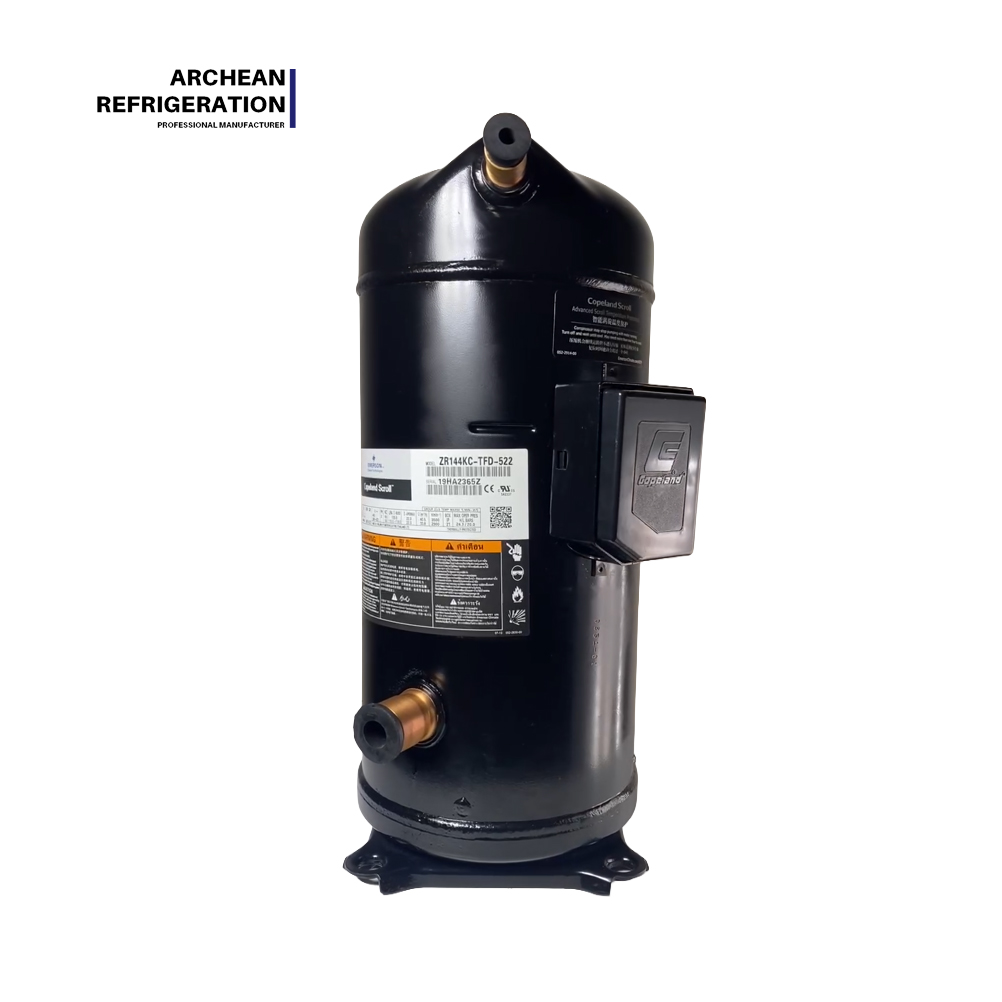
Product reference image. Verify electrical and protection requirements from the complete model and approved documentation.
Compare mounting-hole positions, overall dimensions, suction and discharge connections, connection orientation, and service clearances. Similar shell dimensions do not establish installation compatibility.
Check whether the approved replacement requires adapters, revised piping, mounting hardware, or changes to wiring access. Include those items in the quotation and installation plan.
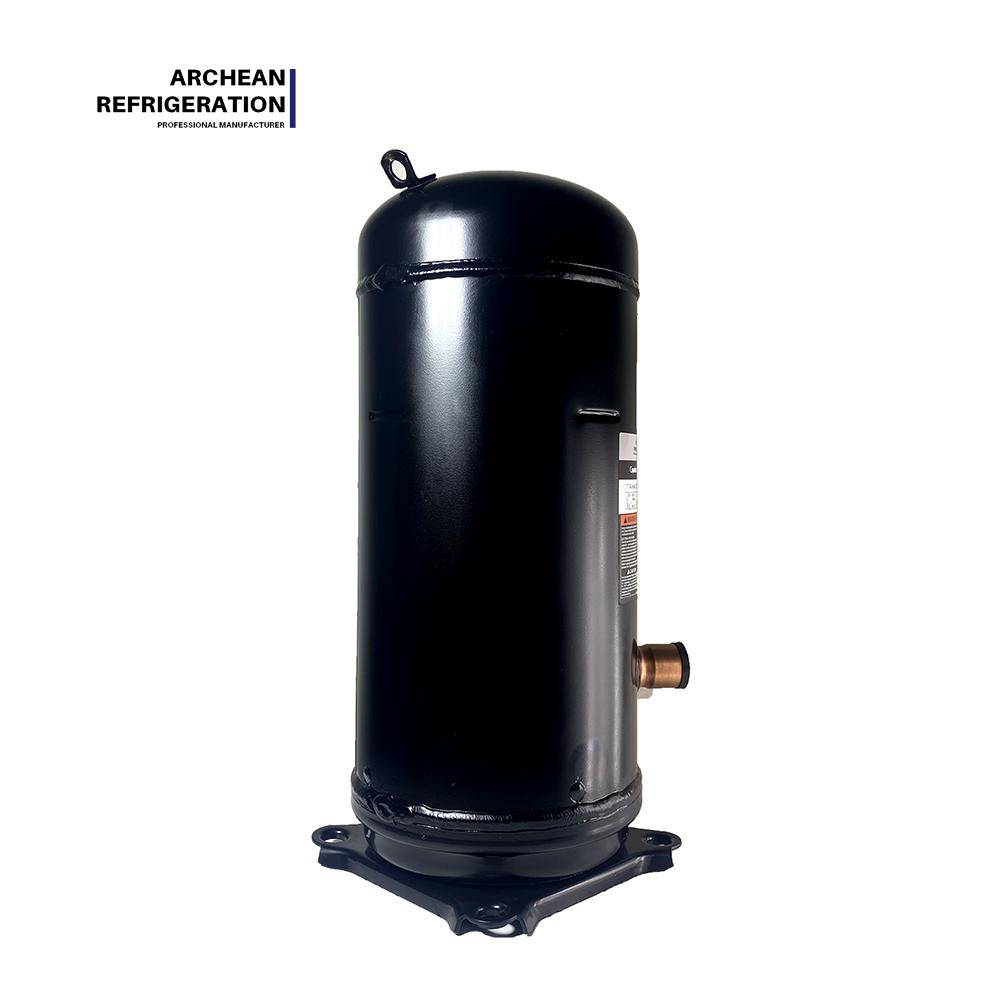
Use dimensional drawings to compare fit. The compressors pictured in this article are not presented as an interchangeable pair.
Confirm whether the original system uses fixed-speed operation, digital unloading, variable-speed control, vapor injection, or another application-specific arrangement.
A compressor with similar capacity may need a different controller or drive. Review sensors, protection interfaces, oil management, and any multi-compressor requirements before accepting an alternative.
For additional application context, see Archean’s Copeland ZR and ZB series comparison. Series names help organize the search, but approval must be based on the complete model.
Ask the supplier to complete a comparison using the original model and the proposed replacement. Mark unresolved items clearly instead of treating missing information as a match.
Comparison Item | Evidence to Record |
|---|---|
Original and replacement models | Complete references, including suffixes. |
Cross-reference source | Manufacturer result, document reference, lookup date, and conditions. |
Application and refrigerant | Approved application, refrigerant, lubricant, and operating envelope. |
Performance | Capacity and input power compared at the same conditions. |
Electrical requirements | Supply, starting arrangement, protection, and required components. |
Physical installation | Drawings, connections, mounting, and required modifications. |
Controls and accessories | Controller or drive compatibility and a list of included and excluded items. |
Classify the outcome as confirmed for the stated application, suitable subject to documented changes, or unresolved. A quotation should make these conditions visible before purchase.
Provide the original model and serial number, readable nameplate photos, equipment identification, refrigerant, power supply, application, and known operating conditions. Add installation photos and explain whether you need an exact model or an alternative.
Ask the supplier to state the proposed complete model, matching basis, required accessories, and unresolved technical points. Review the available compressor technical resources and request the documents applicable to the quoted unit.
Before installation, have the original failure investigated. A correctly matched compressor can still fail if contamination, liquid return, poor oil return, electrical faults, or another underlying problem remains.
A: Not necessarily. Read the associated notes and installation instructions. The replacement may require accessories, wiring changes, mounting parts, or other approved modifications.
A: Horsepower alone is insufficient. Compare application approval, refrigerant, capacity at the required conditions, electrical requirements, controls, and physical fit.
A: Yes. A current service replacement may use a different reference. Confirm the full replacement model and all conditions through the applicable manufacturer documentation.
A: Check the original identification and request technical assistance. Provide equipment and application details rather than selecting a model with a similar number.
A: A refrigerant conversion needs a separate system review. Compressor compatibility alone does not approve the lubricant, controls, other components, or equipment for the new refrigerant.


