


+86-15339975475
info@archeanref.com
info@archeanref.com
+8615339975475
Wutongli, linyi, Shandong, China


Views: 0 Author: Site Editor Publish Time: 2026-08-08 Origin: Site


Transitioning from traditional cooling to modern heating completely changes the mechanical demands on your system. Standard cooling-only air conditioners operate under stable, predictable conditions. Modern heat pumps introduce severe mechanical stress through reverse-cycle operations and extreme high-pressure ratios needed for winter heating. Specifying the wrong HVAC compressor leads to seasonal efficiency drops, premature mechanical failure, and cold-climate underperformance.
You need a rigorous approach to component selection to ensure long-term hardware reliability. This guide provides technical buyers, OEM engineers, and facility planners an evidence-based framework. You will learn to evaluate specific mechanical designs and performance enhancements. Understanding these differences helps you engineer systems capable of handling extreme ambient conditions without sacrificing seasonal efficiency.
Engineers often treat heat pumps like standard air conditioners operating in reverse. This assumption ignores the physical realities of thermal dynamics. A heat pump systems HVAC compressor faces unique challenges requiring robust internal architecture.
Standard cooling units pump refrigerant in a single direction. They enjoy predictable suction and discharge pressures. Heat pumps rely on reversing valves to change refrigerant flow directions seasonally. Bidirectional refrigerant flow introduces sudden pressure equalizations. Every time the reversing valve shifts, the internal mechanical components experience a physical shock. The compressor must withstand these sudden load shifts without damaging internal valves or displacing lubricating oil. Standard AC compressors lack the robust thrust bearings needed to survive this repeated trauma over a 15-year lifespan.
Winter heating demands create an extreme operating envelope. When outdoor temperatures drop, the evaporating temperature plummets. Suction gas becomes less dense. However, the system still needs high condensing temperatures to heat the indoor space effectively. This dynamic results in extreme pressure ratios. The equipment must work significantly harder to compress low-density gas into high-temperature vapor. Traditional compressors overheat or lose capacity under these conditions. Heat pump applications demand internal mechanisms designed specifically to handle wide temperature swings.
Defining a successful heat pump deployment requires looking past peak summer efficiency. True success criteria involve three primary metrics. First, you must achieve stable heating capacity across temperature extremes. Second, the system must maintain its target Coefficient of Performance (COP) even at partial loads. Third, modern units must minimize grid strain during startup. Hard starts pull massive amperage. A successful deployment utilizes soft-start capabilities to reduce electrical demand and prevent mechanical jolting.
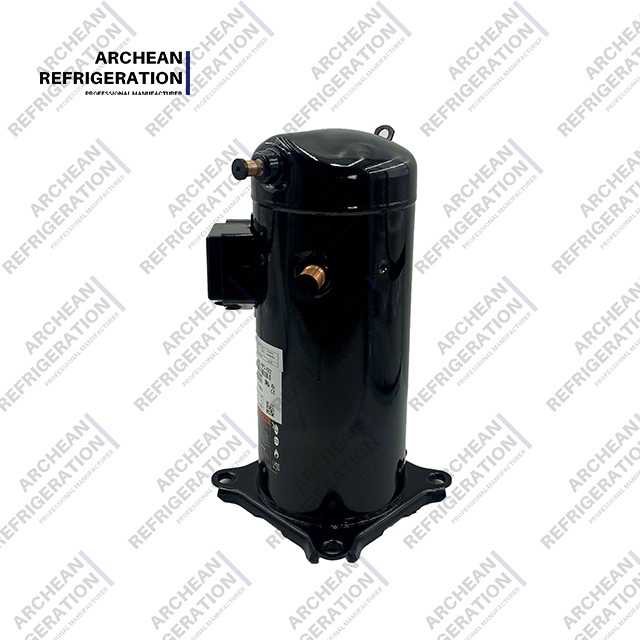
No single mechanical design fits every application perfectly. Different chassis sizes and thermal load requirements dictate specific hardware choices. Industry standards currently categorize solutions into three primary buckets.
Scroll designs utilize two spiral-shaped metal pieces. One remains stationary while the other orbits inside it. This movement compresses the refrigerant gas continuously. Scroll architecture offers high volumetric efficiency. It also provides inherent compliance. Compliance refers to the mechanism's ability to separate slightly if liquid refrigerant or debris enters the compression chamber. This tolerance to liquid slugging prevents catastrophic failure during aggressive defrost cycles. Scroll units produce low vibration and operate quietly.
Best Fit: These units serve residential to mid-sized commercial heat pumps perfectly. They cover capacities ranging from 2 to 25+ tons easily.
Twin-rotary units use two rollers rotating on a single shaft inside a cylinder. The dual-roller design balances the mechanical mass perfectly. This balance significantly reduces vibration compared to single-rotary designs. Twin-rotary models excel at part-load efficiency. They modulate speeds smoothly and consume minimal energy during low-demand periods. Manufacturers appreciate their compact footprint. They cost less to manufacture than equivalent scroll units.
Best Fit: You will find twin-rotary units in mini-splits, smaller unitary systems, and packaged terminal heat pumps (PTHPs). Their small size fits tight chassis dimensions perfectly.
Centrifugal designs use high-speed impellers to add kinetic energy to the refrigerant gas. Modern variations utilize magnetic bearings. Magnetic levitation eliminates physical friction entirely. This oil-free operation solves a massive engineering headache: oil return management at low loads. Centrifugal units scale up effectively. They handle massive cooling and heating loads with unparalleled efficiency.
Best Fit: Engineers specify centrifugal units for large-scale commercial facilities and industrial heat pump chillers. They dominate the multi-hundred-ton capacity market.
| Design Type | Key Technical Advantages | Ideal Capacity Range | Primary Application |
|---|---|---|---|
| Scroll | High volumetric efficiency, liquid slugging tolerance, low vibration | 2 to 25+ Tons | Residential & Light Commercial |
| Twin-Rotary | Compact footprint, superior part-load efficiency, low cost | 0.5 to 5 Tons | Mini-splits, PTHPs, Small Unitary |
| Centrifugal | Oil-free magnetic bearings, extreme scalability, high COP | 100+ Tons | Large Commercial Chillers |
Hardware architecture only tells half the story. Software control and advanced injection techniques bridge the gap between standard operation and extreme cold-climate performance. Proper HVAC compressor specifications dictate exactly how the system reacts to environmental stress.
Legacy systems rely on single-speed on/off cycles. This binary approach wastes energy and degrades indoor comfort. Inverter technology converts incoming alternating current (AC) into direct current (DC). It then modulates the electrical frequency provided to the motor. This frequency modulation allows the motor to spin faster or slower based on real-time thermal demand.
Extreme cold weather starves standard heat pumps of heating capacity. EVI technology solves this fundamental physics problem. The system taps into a secondary heat exchanger to create mid-pressure refrigerant gas. An injection port introduces this mid-pressure gas directly into the middle of the scroll set during the compression cycle. This process increases the total refrigerant mass flow.
The HVAC industry is undergoing a massive regulatory shift. Incoming mandates restrict high Global Warming Potential (GWP) refrigerants. The transition to low-GWP and mildly flammable A2L refrigerants (like R-454B and R-32) requires complete internal redesigns. New refrigerants operate at different discharge temperatures. They require specific Polyolester (POE) or Polyvinyl Ether (PVE) oil blends to maintain lubricity.
Every engineering choice carries a consequence. Pushing a heat pump to achieve higher efficiency ratings often introduces mechanical vulnerabilities. You must understand these implementation risks to engineer robust mitigations.
Variable speed drives introduce a dangerous side effect. When the system operates at minimum inverter speeds (often 15Hz to 20Hz), the refrigerant vapor velocity drops significantly. Refrigerant gas normally carries lubricating oil through the piping network and returns it to the sump. Low vapor velocity causes oil to pool in the evaporator coil or suction lines. The internal bearings eventually starve for lubrication.
Ice accumulation on the outdoor coil destroys heating efficiency. Heat pumps must initiate defrost cycles to melt this ice. The system reverses the refrigerant flow briefly to send hot gas to the outdoor coil. This shift causes rapid pressure equalization. The sudden pressure drop stresses internal valves and orbiting scrolls.
Homeowners expect quiet operation. Variable speed drives alter the motor's rotational frequency continuously. As the motor ramps up and down, it passes through specific mechanical resonant frequencies. Hitting a resonant frequency causes the entire chassis to vibrate aggressively. This vibration generates disruptive, low-frequency humming.
Selecting the right hardware is only step one. Partnering with a reliable HVAC compressor supplier guarantees production scale and field reliability. You must evaluate potential partners using strict technical and logistical criteria.
Off-the-shelf components rarely maximize a proprietary chassis design. Top-tier suppliers offer dedicated engineering support. Evaluate their ability to co-engineer a custom HVAC compressor. They should modify mounting feet dimensions to match your specific base pan. They must also optimize motor mapping software to communicate seamlessly with your proprietary OEM control boards. A strong partnership accelerates your time to market significantly.
Marketing brochures do not survive extreme winters. You need empirical data. Insist on reviewing independent calorimeter test data. This data proves actual capacity and efficiency at specific evaporating and condensing temperatures. Furthermore, demand Highly Accelerated Life Testing (HALT) results. HALT exposes the component to extreme thermal cycling, vibration, and voltage drops simultaneously. This transparency validates their cold-climate performance claims.
Excellent engineering fails if production lines stall. Analyze their component lead times for both mechanical units and specialized inverter drives. Inverter boards often fail before internal mechanical parts do. Evaluate their warranty structures carefully. Check if they separate electrical warranty coverage from mechanical coverage. Ensure they maintain robust regional warehousing. Your field technicians need immediate access to replacement components during peak winter breakdown seasons.
Heat pump compressor selection demands a rigorous balancing act. You must weigh initial hardware costs against necessary cold-climate capabilities and long-term mechanical reliability. Standard cooling architectures simply cannot survive the stress of bidirectional flow and extreme winter pressure ratios.
Keep this decision matrix in mind during your next product iteration. Twin-rotary designs offer unmatched part-load efficiency for tight footprints and budget-conscious mini-splits. Conversely, EVI-enabled scroll compressors remain the undisputed choice for northern climates requiring guaranteed heating capacity at sub-zero temperatures. Centrifugal units provide the only logical path for large-scale industrial applications.
Do not let legacy assumptions dictate modern system design. Audit your current heat pump field performance data immediately. Identify capacity drop-offs during winter months. Then, request detailed engineering datasheets and acoustic maps from qualified suppliers to future-proof your next hardware deployment.
A: Yes. A heat pump compressor cools a space identically to a standard air conditioner. The mechanical process of absorbing indoor heat and rejecting it outdoors remains exactly the same. Heat pumps actually often provide superior cooling efficiency because they frequently utilize advanced variable-speed inverters, matching the exact cooling load better than older, single-stage AC units.
A: No. Retrofitting a standard AC compressor into a heat pump causes rapid mechanical failure. Standard units lack the robust thrust bearings and specific valve designs required to handle bidirectional refrigerant flow. They also cannot survive the extreme pressure ratios generated during winter heating cycles. Doing so voids all manufacturer warranties immediately.
A: EVI significantly extends the lifespan of the equipment. High compression ratios during extreme cold generate massive internal heat. EVI injects mid-pressure, cooler refrigerant directly into the compression chamber. This internal cooling effect dramatically lowers the discharge temperature, preventing oil breakdown and protecting the motor windings from thermal degradation.
A: Key symptoms include excessive reliance on expensive electric auxiliary heat during moderately cold days. You will also notice frequent, ineffective defrost cycles. Short-cycling is another major red flag; the unit turns on and off rapidly, failing to dehumidify properly in summer or maintain stable room temperatures in winter.


