


+86-15339975475
info@archeanref.com
info@archeanref.com
+8615339975475
Wutongli, linyi, Shandong, China


Views: 0 Author: Site Editor Publish Time: 2026-08-17 Origin: Site


Sourcing a commercial compressor remains a high-stakes decision for any facility manager. A single hardware failure can easily cripple entire operational workflows and destroy sensitive inventory. Procurement teams carry the heavy burden of getting this critical choice exactly right the first time.
Unfortunately, buyers often focus solely on upfront unit pricing when evaluating potential replacements. They frequently neglect the critical technical documentation, compliance certifications, and vendor credentials required for long-term reliability. This dangerously narrow focus exposes modern facilities to massive operational downtime and counterfeit equipment risks.
This guide provides a definitive, evidence-based evaluation framework for your next acquisition. We will help procurement teams and engineers compare the right technical and commercial materials before issuing a final purchase order. You will discover exactly which spec sheets, certifications, and warranties to demand.
An undersized compressor inevitably leads to system burnout. It struggles continuously to meet the facility cooling demand. The internal motor overheats under this constant strain. The lubricating oil breaks down rapidly. Conversely, an oversized unit causes frequent short-cycling. The system turns on and off constantly. This wastes massive amounts of energy. It also wears out mechanical contactors and electrical components prematurely.
You must evaluate exact Danfoss refrigeration compressor specifications against your operational baseline requirements. Look closely at the specified cooling capacity under your specific ambient conditions. Examine displacement metrics carefully. Verify the voltage ranges match your facility power supply perfectly.
Next, you must evaluate refrigerant compatibility data. The global HVAC industry is shifting rapidly toward natural alternatives. Regulatory bodies frequently ban older chemical compounds. You must compare transitional GWP (Global Warming Potential) refrigerants against natural options. Ammonia and propane offer excellent thermodynamic properties. Carbon dioxide systems also provide future-proof compliance. Reviewing this compatibility ensures long-term environmental compliance. It protects your facility from sudden regulatory fines.
Finally, review performance curves and acoustic data closely. High noise or vibration levels can ruin certain installation environments. Hospitals and commercial office buildings require ultra-quiet operation. Examine the decibel ratings provided in the technical data sheets. Look for vibration isolation recommendations. Proper acoustic planning prevents costly post-installation modifications. It keeps your surrounding environment comfortable and compliant with local noise ordinances.
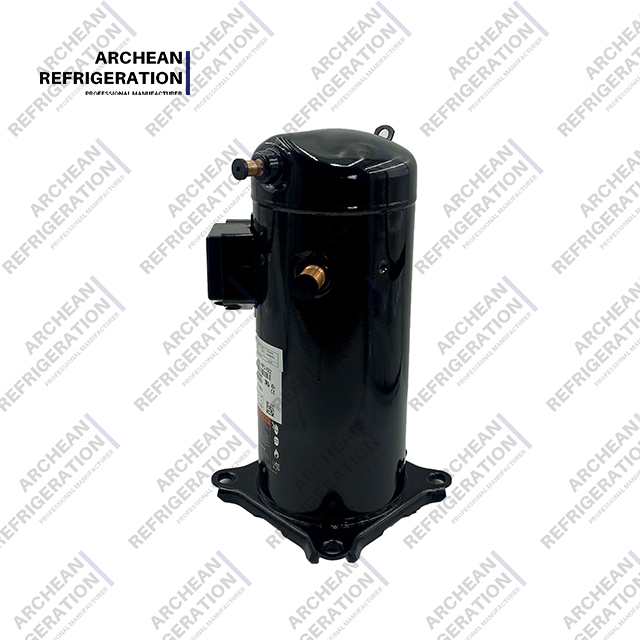
Different cooling environments demand distinct mechanical solutions. A single architecture cannot serve every industrial need efficiently. You must differentiate between reciprocating, scroll, and variable-speed architectures based on the actual application. Supermarket cold rooms require entirely different handling than heavy industrial process cooling systems. Reciprocating models handle high-pressure differentials exceptionally well. Scroll architectures provide smoother, continuous compression for medium-temperature applications.
For continuous, variable load demands, evaluate documentation on inverter-driven variable speed models. They excel at maximizing partial-load efficiency. Traditional fixed-speed units draw full power whenever they run. Variable-speed units adjust their output to match the immediate thermal load exactly. This precise control saves substantial electrical energy during off-peak hours.
Always compare seasonal energy performance metrics when sourcing an hvac projects Danfoss refrigeration compressor. Summer heat waves push cooling systems to their absolute limits. Winter months require significantly less cooling effort. Seasonal metrics reflect this realistic operational variance. This documentation ensures year-round reliability under fluctuating ambient temperatures.
Misaligning compressor architecture creates serious implementation risks. Installing a light-duty commercial unit in a heavy industrial setting guarantees premature failure. This mismatch can void manufacturer warranties quickly. It will also spike your daily energy consumption. Follow these critical alignment steps:
Procurement teams face a common fork in the road during every major upgrade. You must decide between standard catalogue models and engineered-to-order units. Standard models ship quickly from local distribution centers. They feature highly predictable maintenance schedules. Engineered solutions solve unique footprint constraints or extreme environmental challenges.
Assess lead times and technical drawings carefully. Standard units might arrive in a few days. Custom builds often take several months. Compare the logistical requirements of a standard unit against a custom Danfoss refrigeration compressor. Custom integrations require robust engineering support materials from the manufacturer. You need detailed schematics for specialized oil management systems. Complex installations might require separate oil separators and dedicated return lines.
Custom motor voltages and unique mounting configurations also demand precise documentation. Some facilities operate on non-standard electrical grids. They require specially wound motors to prevent voltage drop issues. Unique mounting plates might be necessary to fit legacy equipment racks.
Consider long-term scalability before committing to heavily modified units. Evaluate if custom modifications lock you into proprietary maintenance cycles. Determine whether they still utilize standard replacement parts. A highly custom unit might require expensive, bespoke valves. Standard units typically use universally available contactors and gaskets.
| Evaluation Criteria | Standard Catalogue Units | Custom Configured Units |
|---|---|---|
| Lead Time | Short (Readily available off-the-shelf) | Extended (Built-to-order timeline) |
| Maintenance Parts | Universally available across global markets | Often strictly proprietary to the OEM |
| Technical Documentation | Standardized manuals and quick-start guides | Customized engineering drawings and schematics |
| Initial Cost | Generally lower upfront investment | Premium pricing for specialized engineering |
The gray market for industrial HVAC components presents massive operational risks. Counterfeit compressors look nearly identical to genuine units on the outside. Unauthorized factories copy the paint colors and brand logos perfectly. Inside, they use inferior metals and substandard electrical wiring. These fake units fail quickly under typical industrial loads. They also pose significant safety hazards, including sudden electrical fires.
Always compare official distributor certificates when selecting a Danfoss refrigeration compressor supplier. Do not accept verbal guarantees of authenticity from any vendor. Demand concrete traceability materials before signing any purchase contract. Require strict serial number verification processes. Request detailed factory test reports for each individual unit. Ask for Bills of Lading to guarantee OEM authenticity straight from the origin factory.
Pay close attention to these essential authenticity documents:
Furthermore, you must understand historical manufacturer brand transitions. Review manufacturer transition documentation if you are replacing legacy models. A classic Danfoss refrigeration compressor used in light commercial setups might now carry the Secop brand name. The underlying engineering often remains identical. Understanding this crossover prevents costly procurement errors. It stops teams from ordering incompatible replacement parts for older systems.
Smart procurement teams look far beyond the initial equipment purchase price. They map the projected energy consumption data carefully over the asset lifetime. You will find this crucial power data in the official spec sheets. Compare these consumption figures against your local utility rates. Project this calculation over a five-to-ten-year lifecycle. This exercise helps you understand true long-term energy costs. A cheaper, inefficient unit often costs far more to run over a decade.
Next, compare the fine print in all proposed warranty materials. Many buyers assume all warranties cover parts and labor equally. This remains a dangerous and costly assumption. Distinguish clearly between parts-only coverage and labor-inclusive terms. Labor costs often exceed the price of the physical replacement parts during a major overhaul.
Check the exact warranty duration for different internal components. The electrical motor might carry a shorter warranty than the physical cast-iron housing. Identify specific conditions programmed to void your coverage automatically. Improper installation practices serve as the most common voiding condition. Using the wrong refrigerant oil also terminates most factory warranties immediately.
Finally, assess post-sale support materials carefully during the vendor evaluation phase. Check for the availability of digital diagnostic tools and dedicated mobile applications. These modern tools drastically reduce troubleshooting time. Ensure your facility maintenance teams receive comprehensive printed troubleshooting manuals. Confirm your chosen supplier maintains a localized spare parts inventory. Fast access to replacement gaskets and valves minimizes future emergency downtime.
A successful procurement decision relies completely on evaluating a comprehensive portfolio of materials. You must look beyond glossy standard sales brochures and superficial marketing promises. Strict technical spec sheets, detailed performance curves, and verified vendor authorization certificates form the actual foundation of a safe purchase. Treat every requested document as a critical piece of the facility reliability puzzle. Missing documentation often signals hidden risks or potential counterfeits.
Instruct your buying teams to take immediate, structured action during their next sourcing cycle. Require them to request comprehensive performance curves mapped to your specific seasonal load requirements. Demand physical authenticity guarantees directly from your shortlisted suppliers before moving forward. Calculate long-term energy consumption projections using the provided factory spec sheets. Finalize your purchase orders only after your technical team validates all environmental operating parameters.
A: Focus on cooling capacity at your specific evaporating and condensing temperatures. You should also evaluate the Coefficient of Performance (COP) and the unit's exact electrical footprint to ensure system compatibility.
A: Request an official distributor authorization letter directly from the vendor. Always cross-reference the unit’s serial number via the official product portal database before finalizing your installation.
A: It depends entirely on your application. Custom configurations solve extreme ambient environments or unique OEM footprint constraints. Otherwise, standard models offer faster replacement availability and heavily simplified maintenance schedules.
A: Consult the manufacturer's cross-reference conversion charts. Compare the original displacement and cooling capacity to the current Secop equivalent. This guarantees seamless mechanical and electrical integration during the replacement process.


