


+86-15339975475
info@archeanref.com
info@archeanref.com
+8615339975475
Wutongli, linyi, Shandong, China


Views: 0 Author: Site Editor Publish Time: 2026-09-10 Origin: Site


Industrial and commercial operations require reliable, scalable compressed air or refrigerant gas. Selecting the wrong compressor architecture leads to catastrophic energy waste and premature equipment failure. Many facility managers default to familiar compressor types. They fail to align the technology directly to their specific duty-cycle demands. This misalignment degrades system performance rapidly.
A rotary compressor serves as an industry standard for continuous-use applications. Evaluating its true fit requires looking well beyond peak output. You must carefully analyze the facility footprint, thermal behavior, and mechanical durability. We will explore how these advanced systems operate under heavy loads. You will discover their most common industrial applications. Finally, you will learn how to specify the exact machine needed for your daily production goals.
Rotary compressors are purpose-built for 100% continuous duty cycles, making them ideal for heavy manufacturing, large-scale HVAC, and continuous pneumatic processes.
An AC rotary compressor or refrigeration compressor provides smoother operation and higher energy efficiency at scale compared to traditional piston alternatives.
The primary risk in adoption is oversizing; rotary units lose their efficiency and risk mechanical degradation (short-cycling) if used for intermittent, low-demand tasks.
Evaluation must prioritize Variable Speed Drive (VSD) capabilities, required ISO air purity classes, and long-term maintenance infrastructure over initial capital expenditure.
Understanding how these machines function helps you make better purchasing decisions. A rotary system relies on a positive displacement mechanism. It typically uses either twin-screw rotors or sliding vanes. As the internal components spin, they draw air or gas into a chamber. The volume of this chamber decreases continuously as the rotors turn. This action compresses the gas smoothly. You do not experience the aggressive pulsation found in traditional piston systems. The continuous sweep delivers a highly stable flow rate.
Most industrial environments demand non-stop operation. Reciprocating units struggle under these conditions. They rely on pistons moving up and down rapidly. This violent motion generates immense friction. Pistons require frequent cool-down periods to survive. Rotary machines bypass this limitation entirely. They lack reciprocating parts. They operate using smooth, continuous rotational motion. You can run these units 24 hours a day, seven days a week. They never require a mandatory resting phase. They thrive when pushed to their maximum continuous limits.
Continuous heavy-duty operation generates incredible heat. Unchecked heat destroys internal components rapidly. Rotary systems manage this thermal load brilliantly through fluid or oil injection. The system injects a specialized fluid directly into the compression chamber. This fluid serves three distinct purposes. First, it seals the microscopic clearances between the rotors. Second, it lubricates the spinning bearings. Third, it acts as a massive thermal sponge. The oil absorbs the heat of compression instantly. This advanced thermal management keeps internal temperatures stable. It prevents mechanical degradation during marathon production runs.
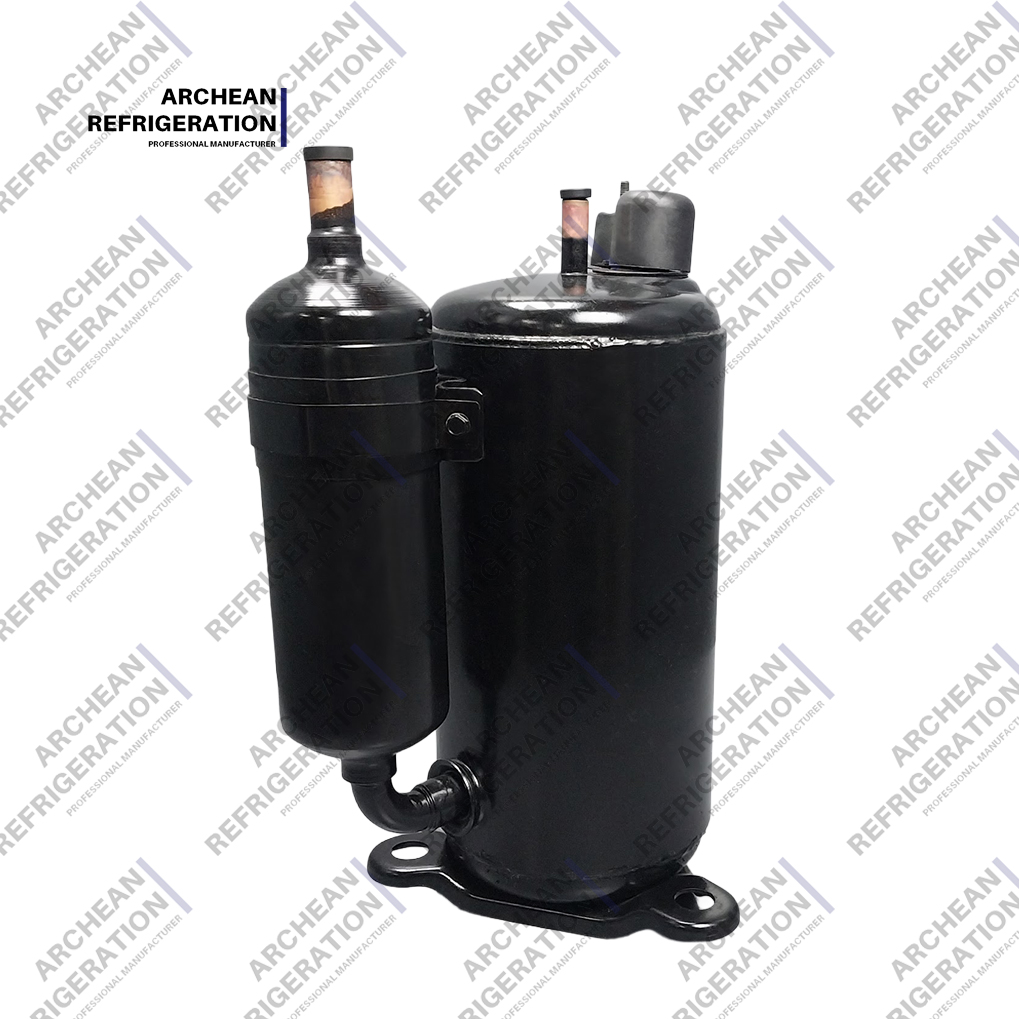
Different industries leverage this technology to solve unique operational challenges. You will find these machines anchoring critical infrastructure worldwide. They perform best when the workload remains constant and demanding.
Modern climate control requires massive, continuous heat exchange. An AC rotary compressor drives large commercial chillers effortlessly. Office buildings and shopping centers depend on them for uninterrupted cooling. The cold chain industry relies on them equally heavily. A refrigeration compressor using rotary mechanics powers massive industrial cold storage warehouses. Food processors need exact temperature control to prevent spoilage. The continuous nature of a rotary mechanism prevents temperature spikes. It keeps perishable goods safe during processing and transit.
Automated manufacturing cannot tolerate inconsistent air pressure. Assembly lines use these machines to power continuous pneumatic tools. Pressure drops halt production lines instantly. Automated robotics require highly stable air flow to perform precise movements. Packaging equipment runs flawlessly when supplied by a rotary unit. Plant managers place these machines at the heart of their operations. They guarantee the steady baseline pressure required for modern manufacturing speeds.
Product purity remains non-negotiable in sensitive sectors. Pharmaceutical labs and food packaging plants face strict regulatory oversight. They must often meet ISO 8573-1 Class 0 air purity standards. Even a microscopic drop of oil can ruin an entire production batch. Manufacturers solve this by deploying oil-free rotary architectures. These specialized units use advanced anti-friction coatings instead of oil injection. They deliver 100% oil-free air continuously. They completely eliminate the risk of product contamination.
Hazardous environments present unique gas handling challenges. Energy plants use rotary technology for critical vapor recovery processes. Chemical refineries require safe, continuous gas compression. Toxic or highly reactive gases demand stable handling. Rotary systems transport these fluids safely across large processing facilities. Their lack of vibration and predictable thermal behavior makes them ideal for highly regulated environments. Engineers trust them to handle dangerous compounds without fail.
Selecting the correct technology requires honest operational analysis. You must evaluate your specific duty cycle, noise tolerance, and long-term financial expectations. Choosing poorly here guarantees operational headaches later.
The duty cycle dictates everything. Rotary systems excel under continuous, steady-state demand. You should run them at 80 to 100 percent capacity for best results. They want to work hard all day. Reciprocating systems handle intermittent, fluctuating demand well. However, piston units face hard limits. You cannot push a reciprocating unit past a 50 to 60 percent duty cycle safely. Doing so causes rapid overheating and mechanical failure. Match your purchase to your actual daily workload.
Facility design costs drop significantly when you choose rotary units. Piston systems generate violent vibration and deafening noise. They typically require dedicated, sound-proofed compressor rooms. You must isolate them from the main workforce. Rotary units operate incredibly quietly. The smooth rotational mechanics produce very little vibration. You can place them directly on the production floor. This eliminates expensive architectural modifications. It also shortens the required piping distances, reducing pressure drops.
Upfront price tags tell a very deceptive story. Reciprocating units cost noticeably less to purchase initially. Many buyers fall into this trap. Rotary units cost more upfront but yield vastly superior long-term financial performance. High-demand scenarios expose the inefficiency of piston units quickly. Rotary systems deliver superior energy efficiency over years of continuous use. They also possess fewer internal wear parts. You spend far less money on replacement components and emergency service calls.
Specifying a new system requires careful mathematical analysis. You cannot guess the required specifications. A poor specification wastes energy and degrades the machinery.
You must baseline your actual facility air demand accurately. Measure the exact Cubic Feet per Minute (CFM) and Pounds per Square Inch (PSI) required. Many engineers fall into a dangerous trap here. They add excessive "buffer capacity" just to feel safe. This forces a rotary machine into inefficient load/unload cycles. The unit constantly turns on and off because it produces too much air too quickly. Oversizing destroys efficiency. Size the machine precisely to your measured demand.
Motor drive selection dramatically impacts your energy bills. Fixed speed units run at one constant RPM. They suit operations experiencing unvarying, steady baseload demand. However, most facilities experience shifting demand throughout the day. A Variable Speed Drive (VSD) adjusts the motor speed instantly. It matches fluctuating demand exactly. The VSD slows the motor down during light shifts and speeds it up during peak production. This intelligent modulation captures massive energy savings.
Drive Technology Comparison
| Feature | Fixed Speed Drive | Variable Speed Drive (VSD) |
|---|---|---|
| Best Application | Constant, unvarying 24/7 production baseloads. | Facilities experiencing shifting daily or seasonal demand. |
| Motor Operation | Runs at 100% RPM constantly when loaded. | Modulates RPM seamlessly to match air demand. |
| Energy Efficiency | Poor efficiency if demand drops frequently. | Exceptional efficiency; often saves 35%+ in energy costs. |
| Upfront Cost | Lower initial capital investment. | Higher initial capital investment. |
You must choose between air-cooled and water-cooled architectures. Evaluate your facility ambient temperatures carefully. Air-cooled systems use internal fans to blow ambient air across heat exchangers. They work perfectly in well-ventilated spaces. However, they struggle in extremely hot, enclosed environments. Water-cooled systems pipe chilled water through the unit. They perform flawlessly in punishingly hot facilities. Check your local utility costs before choosing. Water-cooled units incur ongoing municipal water or cooling tower expenses.
Raw compressed air contains moisture and microscopic debris. You must treat this air before it reaches your equipment. Assess your end-use requirements thoroughly. Some applications require integrated refrigerated dryers. These dry the air to prevent pipe corrosion. Specialized manufacturing might demand standalone desiccant dryers. They strip out all humidity for sensitive processes. Match your filtration micron ratings to your specific industry compliance standards.
Buying the equipment represents merely the first step. You must plan for long-term operational realities. Understanding energy consumption and maintenance needs prevents budget overruns.
Do not fixate on the purchase price. Over a typical 10-year lifespan, energy consumption dominates your budget. Upfront capital usually accounts for only 10 percent of total lifetime spending. Routine maintenance takes up another 10 to 20 percent. Electrical energy consumption claims the remaining 70 to 80 percent. A slightly cheaper, less efficient machine costs you a fortune over a decade. Invest heavily in energy-efficient models upfront. They pay for themselves rapidly through reduced monthly power bills.
Operating these systems incorrectly ruins them. We call this primary risk "short-cycling." It occurs when you run a rotary unit intermittently for low-demand tasks. The machine turns on for five minutes, then shuts off. The internal oil never reaches optimal operating temperatures. Moisture in the air condenses inside the cold oil reservoir. This water buildup degrades the oil prematurely. It strips away the lubricating properties. The internal airend eventually rusts and fails catastrophically. Always ensure your system runs long enough to get fully hot.
Successful facilities abandon reactive maintenance mentalities. You cannot wait for the machine to break. Transition your team to predictive maintenance schedules immediately. Proactive care extends the equipment life by decades.
Routine Oil Sampling: Extract and test compressor oil every few months. Lab analysis reveals microscopic metal wear before a failure occurs.
Vibration Analysis: Use acoustic sensors to monitor bearing health. Small changes in vibration indicate early mechanical fatigue.
Filter Management: Replace air intake and fluid filters precisely on schedule. Blocked filters force the motor to work harder, wasting electricity.
Airend Rebuilds: Schedule major overhauls proactively. Most high-quality airends require a full factory rebuild between 40,000 and 60,000 hours of runtime.
A high-quality rotary system guarantees continuous, reliable production. It serves as the beating heart of your facility. You should never treat it as a generic utility purchase. The right specification ensures stable pressure, lower energy bills, and decades of reliable service. The wrong specification guarantees frustrating downtime and massive electrical waste.
Your next step requires gathering hard data. We strongly recommend commissioning a professional air demand audit. Install temporary data-logging equipment on your current system. Log your exact air consumption for 7 to 14 days. Map your facility usage peaks and valleys accurately. Request vendor quotes only after analyzing this hard data. This proactive step guarantees you purchase the exact technology your operation truly needs.
A: These machines deliver exceptional longevity when properly maintained. The core compression module, known as the airend, typically lasts between 40,000 and 60,000 hours. You must adhere to strict oil and filter replacement schedules to reach this lifespan. Neglecting routine maintenance cuts this operating life in half.
A: Yes, absolutely. Engineers design them explicitly for 24/7 continuous operation. They do not possess reciprocating pistons, so they lack the aggressive friction that requires resting periods. They actually perform better and last longer when running continuously without thermal interruption.
A: Oil carryover usually indicates a specific operational fault. The most common culprit is a blocked scavenge line. It can also happen if the internal air/oil separator filter ruptures. Finally, running the machine at excessively low temperatures prevents proper fluid separation, pushing oil into the air network.
A: They are significantly more efficient, but only under specific conditions. They excel when running continuously at full load or when utilizing a Variable Speed Drive (VSD). If you use them for frequent idling or highly intermittent tasks, they become less efficient than standard piston models.


