
English 
+86-15339975475
info@archeanref.com
info@archeanref.com
+8615339975475
Wutongli, linyi, Shandong, China


Views: 0 Author: Site Editor Publish Time: 2026-10-08 Origin: Site


Commercial compressor failure triggers immediate panic across facilities. Facility managers must restore cooling fast to protect valuable inventory. Technicians feel immense pressure to get units back online immediately. Unfortunately, rushed equipment replacements often trigger disastrous secondary failures. You can no longer swap a compressor using a simple mechanical capacity match. Evolving EPA regulations dictate your entire replacement path today. New refrigerant chemistries completely change how legacy systems operate.
Every commercial refrigeration system relies on a delicate balance of pressures, temperatures, and lubrication. When that balance shatters, replacing the heart of the system requires precise engineering foresight. We designed this guide to establish a clear framework. You will learn how to evaluate replacement options effectively. You will discover proven methods to avoid dangerous chemical mismatches. We will help you ensure long-term system compliance without facing excessive facility downtime.
Legacy compressors face a strict regulatory environment. You cannot simply swap them out like-for-like anymore. Proper refrigeration compressor compatibility defines your legal and operational boundaries. Facility teams must pivot their maintenance strategies quickly to survive these changes.
The EPA enforces aggressive environmental phaseouts across the commercial sector. R-22 depletion has already transformed the industry. The AIM Act now forces a rapid R-410A phasedown. Manufacturers are ceasing production of older compressor models to comply. You will find it increasingly difficult to source exact replacements for aging rooftops and rack systems.
Inaction carries heavy financial penalties for any business. Sourcing obsolete refrigerants artificially inflates your operating budgets. Technicians charging older units face skyrocketing chemical costs. This creates severe supply chain vulnerabilities. You risk extended facility outages during peak cooling demand. A simple repair can morph into a week-long crisis waiting for parts.
A successful replacement must meet several stringent criteria. You need full legal compliance to avoid hefty fines. You must match the exact cooling capacity required by your evaporator. You should stabilize or reduce daily energy consumption. These goals require exact chemical alignment across every pipe, valve, and cylinder.
Industry chatter often praises "drop-in" refrigerants. Some salespeople claim you can easily drop new chemicals into an old system. They suggest pairing them alongside a fresh compressor without extra work. This is a dangerous myth. The chemical realities prove otherwise.
Lubricant mismatch destroys equipment incredibly fast. Older systems use Mineral Oil (MO) or Alkylbenzene (AB). New refrigerants demand Polyolester (POE) oils. These substances differ fundamentally on a molecular level. Mineral oil is non-polar. POE is highly polar. Mixing these oils causes catastrophic failure. Modern refrigerants cannot carry mineral oil back to the compressor crankcase. The blend creates a thick sludge. It clogs tiny passageways inside the system. Your new compressor will seize from oil starvation within weeks.
Seal and gasket degradation presents another immediate threat. New refrigerants interact differently across older rubber compounds. Legacy neoprene seals will often shrink or swell dramatically. This unpredictable reaction causes massive system leaks. You lose your expensive new refrigerant charge almost immediately.
You must also account for performance glide. Alternative refrigerants operate at different pressure thresholds. They reach different peak temperatures during phase changes. The bubble point and dew point differ significantly from legacy chemicals. This shift completely alters your compressor’s operating envelope. It forces the motor to work harder, generating excess heat.
Major manufacturers monitor these installation issues closely. They routinely perform forensic autopsies on failed parts returned under warranty. They will void your warranty immediately upon discovering incompatible refrigerant or oil mixtures. You carry the full replacement cost.
Decision-makers need a skeptical, outcome-focused approach. You must evaluate any replacement compressor thoroughly before signing purchase orders. We built a detailed checklist to guide your engineering and maintenance teams.
Compressor Swap Evaluation Matrix
| Evaluation Phase | Legacy Assumption | Modern Requirement |
|---|---|---|
| Capacity Matching | Match historical BTU/h output directly | Calculate BTU/h strictly at new design temperatures |
| Oil Management | Reuse existing lines without deep cleaning | Flush system entirely until under 5% mineral oil remains |
| Component Sizing | Keep existing TXV and standard filter driers | Upsize or replace components to match new flow rates |
You must verify the required cooling capacity carefully. Measure it in BTU/h. Do this at the exact design temperatures of your new refrigerant. Never rely on the old baseline capacity listed on the original nameplate. Retrofit refrigerants generally lose about 5% to 10% of their capacity compared to their predecessors.
You should also check the expected discharge temperatures. Retrofit blends often run much hotter under heavy loads. High ambient outdoor temperatures push these discharge temperatures even higher. Excessive heat leads to rapid oil breakdown inside the compressor cylinders. You might need to install demand cooling or injection cooling modules.
Assess your required labor hours realistically. You must completely flush legacy mineral oil from the system lines. Industry standards dictate a strict safety threshold. Less than 5% residual mineral oil must remain before adding POE. Achieving this takes significant time. Technicians must perform multiple sweeps using dry nitrogen and specialized flushing solvents. Cutting corners here guarantees compressor failure.
A new compressor changes mass flow rates drastically. You must verify component compatibility across the entire loop. Check your thermal expansion valves (TXV/TEV). An undersized TXV will hunt for superheat wildly. It will starve the compressor of cooling gas. Inspect your filter driers. Standard driers cannot capture the moisture attracted by highly hygroscopic POE oils. Measure your suction and liquid line sizes. You will likely need to upsize them to prevent pressure drops.
Medium-to-high temperature compressors offer a practical solution for facility upgrades. Manufacturers design them specifically for retrofit versatility. They handle various chemical blends safely. They simplify the transition process for field technicians.
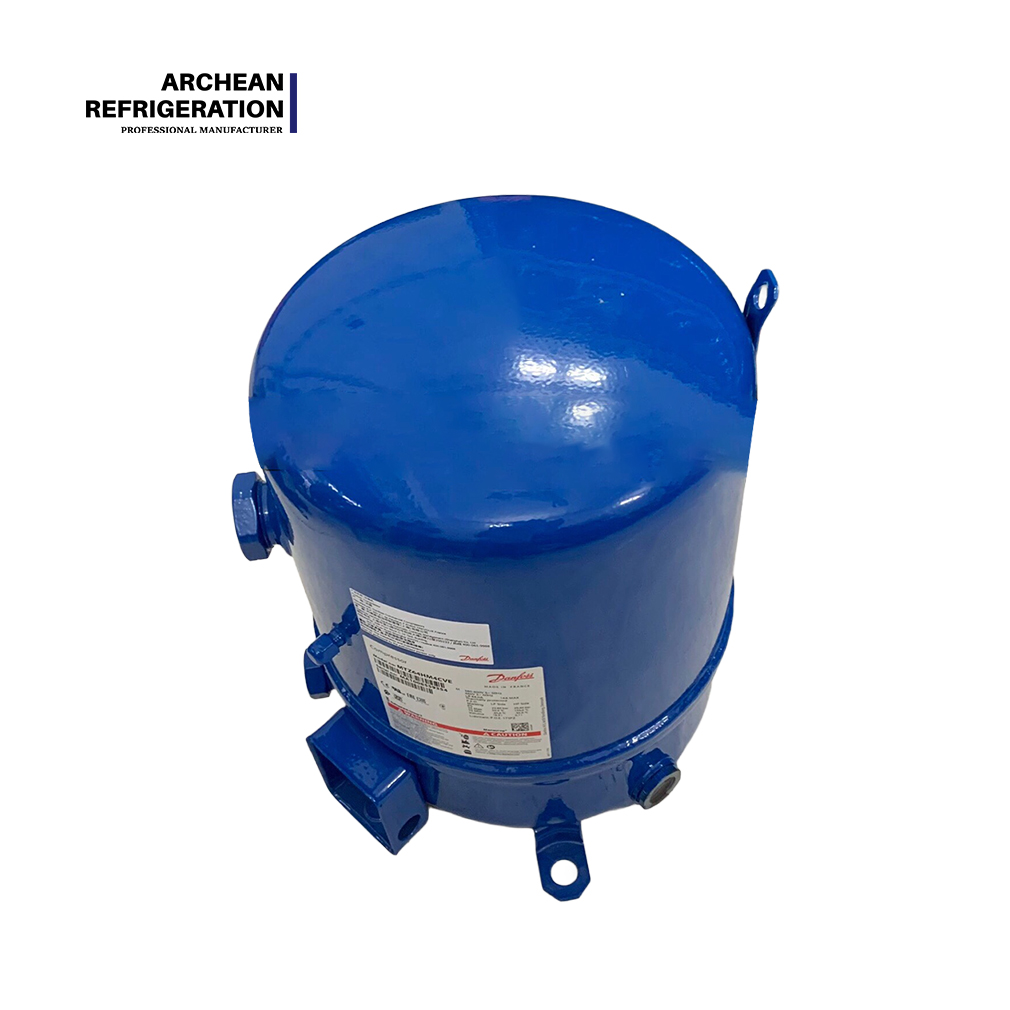
The Danfoss MTZ compressor stands out here. It serves as a benchmark for adaptability. It performs exceptionally well in transitional systems facing regulatory uncertainty.
We highly value its direct impact on maintenance outcomes. These reciprocating units arrive fully pre-charged with premium POE oil. They are immediately ready for modern HFC and low-GWP blends out of the box. They eliminate the guesswork surrounding initial oil balancing.
They provide a remarkably broad operating envelope. You can run multiple approved refrigerants safely. Common options include R404A, R407A, R407C, and R507A. This flexibility lets facilities pivot easily. If environmental regulations change again in five years, your hardware remains viable. You simply recover the gas, swap the refrigerant, and adjust the valves.
Internal motor protection adds critical safeguards. It handles varied thermal stresses smoothly. Different refrigerant blends generate entirely different heat profiles across the motor windings. Built-in protection prevents catastrophic overheating during extreme summer demands.
Implementation still requires absolute discipline. The unit provides high versatility. However, you must adhere strictly to system flushing protocols. TXV adjustments remain mandatory during installation. You cannot ignore basic refrigeration physics just because the compressor handles multiple gases well.
A simple compressor swap is not always viable. Sometimes, it acts as a costly band-aid. You need a binary decision framework. This logic helps you allocate capital correctly. It prevents you from sinking operating budgets into dying equipment.
Consider a straightforward compressor swap when these specific conditions align perfectly:
Replace the entire condensing unit when facing these distinct hurdles:
A new system also provides a full factory warranty. A swapped compressor only covers the compressor itself. When dealing with heavily aged piping, a clean slate often presents the lowest long-term risk.
Refrigeration upgrades are fundamentally a chemical challenge today. Regulatory changes compound this difficulty daily. It goes far beyond a simple mechanical swap. You must align the lubricant, seals, and system pressures perfectly to guarantee success. Failing to respect chemical miscibility will destroy expensive equipment rapidly.
Take immediate action before failure strikes your facility. Audit your current system nameplates today. Document the precise refrigerant type. Record the oil type listed. Note the exact capacity requirements. Take clear photographs of all data plates. Do this long before requesting vendor quotes or dispatching technicians.
Consult directly with technical specialists regarding your findings. They will help you verify complex compatibility matrices. They can navigate the shifting landscape of EPA phaseouts effectively. They will select the perfect replacement hardware to match your operational baseline and keep your cooling online.
A: Yes, but not with R-22. The system must be recovered, flushed of mineral oil, retrofitted with POE oil, and recharged with an approved retrofit refrigerant. The new compressor must be rated for that specific blend.
A: The oil will not return to the compressor. It will pool in the evaporator coils, causing the compressor to seize due to lack of lubrication, usually within a few weeks of operation.
A: Yes. Most retrofit refrigerants experience a 5% to 10% capacity loss or require higher power consumption compared to legacy refrigerants. Compatibility calculations must account for this operational drop.


