


+86-15339975475
info@archeanref.com
info@archeanref.com
+8615339975475
Wutongli, linyi, Shandong, China


Views: 0 Author: Site Editor Publish Time: 2026-08-12 Origin: Site


Commercial cold rooms face intense pressure to minimize daily energy consumption. Facility managers must strictly maintain precise temperature tolerances. Failing to do so causes devastating product loss. Aging reciprocating compressors consistently struggle to uphold baseline performance standards. They experience frequent mechanical failures near the end of their lifecycles. Upgrading to a modern scroll refrigeration compressor provides a highly reliable solution for medium-capacity storage facilities. You gain immediate improvements in both temperature consistency and daily power usage.
This technical guide examines the distinct operational advantages of implementing scroll technology. We outline the potential integration risks you might encounter during equipment retrofits. Finally, we detail the essential procurement criteria needed to evaluate these advanced systems accurately. You will learn how to match modern compressor capabilities directly against your facility's specific thermal loads.
Legacy refrigeration systems rely heavily on reciprocating compressors. These units feature numerous internal moving components like pistons, rods, and suction valves. Over time, these intricate parts suffer immense mechanical wear. This degradation forces the compressor to cycle on and off more frequently. Frequent cycling drives up daily operating expenses drastically. It also creates dangerous temperature fluctuations inside your storage space. When temperatures drift outside acceptable ranges, valuable inventory faces immediate spoilage risks.
Facility managers must define clear success criteria before approving system upgrades. A successful cold room compressor replacement should achieve several measurable outcomes. You must look beyond simply swapping an old unit for a new one. Modernization efforts should directly improve facility performance across multiple metrics.
Consider these core success criteria for your upcoming system upgrade:
The commercial market now heavily favors transitioning to cold rooms scroll refrigeration compressor systems. This shift is especially prominent in low and medium-temperature applications. Facilities requiring capacities ranging from 2 to 15 horsepower per unit see the greatest benefits. Scroll technology eliminates the mechanical fragility inherent in older designs. It replaces complex piston movements with a smooth, continuous compression cycle. This fundamental design change resolves the most common efficiency problems found in aging cold rooms.
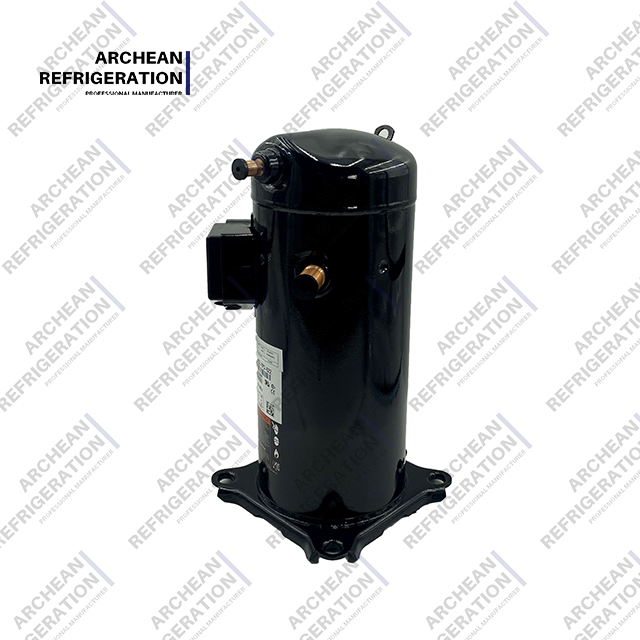
Understanding the mechanical differences between technologies helps you make informed purchasing decisions. Scroll compressors achieve superior volumetric efficiency through a uniquely simple process. The mechanism utilizes two scroll plates. One scroll remains completely stationary. The second scroll orbits inside the stationary plate. Gas enters the outer edge of the scrolls. The orbiting motion forces this gas into increasingly smaller pockets toward the center. Finally, the highly pressurized gas discharges continuously from the middle port.
This design completely eliminates clearance volume losses. Traditional reciprocating compressors always leave a small amount of pressurized gas in the cylinder. This leftover gas re-expands during the suction stroke, wasting energy. Scroll units do not suffer from this re-expansion penalty. They deliver consistent cooling capacity even when high ambient temperatures strain the system.
Below is a direct comparison between scroll and legacy reciprocating architectures.
| Performance Metric | Scroll Compressor Technology | Legacy Reciprocating Technology |
|---|---|---|
| Volumetric Efficiency | Nearly 100% due to zero clearance volume. | Lowered by re-expansion of residual gas. |
| Moving Parts | Very few (primarily the orbiting scroll and shaft). | Many (pistons, connecting rods, internal valves). |
| Discharge Flow | Continuous flow eliminates gas pulsation entirely. | Pulsating flow causes pipe vibration and stress. |
| Liquid Tolerance | High tolerance via engineered radial compliance. | Low tolerance; liquid easily destroys rigid valves. |
The acoustic and spatial impacts of scroll technology offer major facility benefits. Scroll units produce a significantly lower decibel output. They lack the noisy clattering valves found in piston systems. This noise reduction proves critical for retail environments or supermarkets located near residential zones. Furthermore, scroll compressors feature a highly compact footprint. They free up valuable mechanical room space. This extra room allows you to design modular expansions for future facility growth easily.
Liquid tolerance represents another massive advantage. Refrigeration systems occasionally suffer from liquid refrigerant slugging. Liquid cannot be compressed. In older technologies, this liquid violently destroys internal suction valves. Scroll designs utilize a feature called radial compliance. When liquid enters the chamber, the scroll plates separate slightly. This brief separation allows the incompressible liquid to pass safely. The plates then pull back together immediately. You avoid catastrophic mechanical failure completely. However, you should still practice proper superheat management. Continuous liquid slugging will eventually wash away internal lubrication.
Selecting the correct unit requires careful analysis of your operating parameters. You cannot rely on horsepower ratings alone. You must cross-reference your thermal load requirements against scroll refrigeration compressor specifications precisely. Every compressor possesses a strictly defined operating envelope. This approved map dictates the safe boundaries for evaporating and condensing temperatures.
First, map your cold room's specific temperature demands. Determine your lowest required evaporating temperature. Next, determine the highest expected condensing temperature during peak summer heat. Plot these two data points on the manufacturer's performance curve. If your points fall outside the approved operating envelope, the compressor will fail prematurely. Running outside these limits causes dangerous discharge temperatures or poor oil return.
Refrigerant compatibility is another mandatory evaluation criterion. Environmental regulations mandate the phase-down of high-GWP refrigerants. You must assess specifications for compatibility with modern alternatives. Look for approvals covering low-GWP blends like R-448A and R-449A. Some specialized commercial facilities also utilize CO2 (R-744) systems. Ensure the compressor materials and internal lubricants specifically match your chosen refrigerant. Mismatched oils lead to rapid bearing failure.
Next, evaluate modulation capabilities and inverter readiness. Cold room thermal loads fluctuate throughout the day. Product loading, door openings, and ambient weather shifts change the required cooling capacity constantly. You must determine if these load fluctuations justify advanced modulation strategies.
You must also interpret efficiency ratings accurately. Review the Energy Efficiency Ratio (EER) and Coefficient of Performance (COP) data. Do not just read the peak marketing numbers. Analyze these metrics at your specific design conditions. A compressor might boast a high COP at moderate temperatures but perform poorly at your facility's extreme operating points.
While scroll technology delivers exceptional performance, retrofitting involves specific integration risks. You must proactively address these technical limitations during the installation phase. Ignoring them leads to immediate and costly equipment failure.
The most absolute vulnerability of a scroll compressor is reverse rotation. Piston compressors can often pump refrigerant regardless of motor rotation. Scroll compressors cannot. If wired incorrectly, the orbiting scroll spins backward. It will not pump refrigerant gas. Instead, the internal scroll plates grind against each other without proper lubrication. The compressor will destroy itself within minutes. You must mandate the installation of phase monitors. These reversal protection relays instantly cut power if they detect improper electrical phasing. This simple safeguard prevents catastrophic startup failures.
Thermal limits pose another challenge in extreme low-temperature applications. Standard scroll compressors struggle when evaporating temperatures drop exceptionally low while condensing temperatures remain high. This high compression ratio generates intense internal heat. The discharge gas temperature can easily exceed safe operating limits. This heat breaks down internal oil and damages internal seals.
If you operate blast freezers or deep storage rooms, standard scroll models will not suffice. You must specify units equipped with liquid injection or Enhanced Vapor Injection (EVI) technologies. EVI injects mid-pressure refrigerant vapor directly into the middle of the scroll compression cycle. This ingenious process cools the internal discharge gas significantly. It dramatically extends the safe operating envelope for low-temperature applications.
Facility managers must also reset their maintenance expectations. Scroll compressors feature hermetic or semi-hermetic sealed steel shells. They offer zero access to internal mechanical components. If a legacy piston compressor fails, technicians can often unbolt the heads and rebuild the valves on-site. Scroll compressors do not offer this repairability. If internal mechanical failure occurs, you must replace the entire unit. You cannot rebuild it. Therefore, maintaining clean electrical power and proper system superheat becomes absolutely vital to protect your investment.
Choosing the right hardware is only half the battle. Selecting a highly competent supply partner dictates your long-term operational success. A reliable vendor does much more than simply ship a box to your facility. They provide essential engineering support before the purchase order is even signed.
Strong application engineering support separates excellent vendors from average ones. Your chosen vendor must offer proprietary modeling software. This software should validate your compressor selection against your specific thermal load and local ambient conditions. They should simulate pressure drops, piping runs, and extreme summer temperatures. This digital validation prevents costly under-sizing or over-sizing errors.
Sometimes standard catalog items fail to meet complex facility requirements. In these instances, you must determine when to pursue a custom scroll refrigeration compressor. Specialized environments demand specific modifications. If your cold room operates on an offshore rig or coastal area, you need marine-grade corrosive environment coatings. If your facility enforces strict noise ordinances, you might require factory-fitted acoustic jackets. Large supermarket racks often demand custom integrated oil management systems to ensure proper lubrication across long piping distances. A capable vendor can execute these modifications flawlessly at the factory level.
Finally, evaluate the supply chain infrastructure of your potential scroll refrigeration compressor supplier. Review their warranty terms meticulously. Determine exactly what the warranty covers regarding labor versus parts replacement. Assess their regional parts availability. If your custom compressor fails during peak season, waiting six weeks for an overseas replacement will bankrupt your inventory. Demand clear service level agreements regarding lead times for exact equipment replacements. This proactive evaluation mitigates the risk of catastrophic future downtime.
Transitioning away from legacy piston architectures represents a major step forward for commercial storage facilities. While scroll compressors require a thoughtful upfront investment, they deliver exceptional long-term value. You achieve substantial energy savings through superior volumetric efficiency. You gain tighter temperature control thanks to continuous compression cycles. Furthermore, the massive reduction in moving parts significantly decreases unexpected maintenance events. These combined benefits make scroll technology the optimal choice for upgrading modern commercial cold rooms.
To move forward successfully, you must initiate a comprehensive thermal load audit of your current facility. Measure your existing peak cooling demands and ambient temperature extremes carefully. Cross-reference your current system metrics against modern scroll performance curves. Verify that you have the necessary electrical safeguards, like phase monitors, included in your project scope. Once you gather this empirical data, approach trusted engineering suppliers to request validated, application-specific quotes.
A: Yes, but it requires careful system evaluation. You must verify existing pipe sizing to ensure proper refrigerant flow. You must also calculate oil return requirements accurately. Crucially, you must install appropriate electrical safeguards, such as phase monitors, to prevent reverse rotation damage during startup.
A: You can typically expect a lifespan of 10 to 15 years. This duration relies heavily on proper initial installation. Maintaining clean, stable electrical power and keeping the system strictly within its approved operating temperature envelope maximizes the compressor's longevity.
A: They can be highly effective, provided you select the correct specific model. The chosen unit must feature Enhanced Vapor Injection (EVI) technology. EVI manages internal heat, allowing the compressor to handle extremely low evaporating temperatures without exceeding maximum safe discharge limits.


