


+86-15339975475
info@archeanref.com
info@archeanref.com
+8615339975475
Wutongli, linyi, Shandong, China


Views: 0 Author: Site Editor Publish Time: 2026-08-23 Origin: Site


Think of the compressor as the beating heart of your commercial or industrial cooling setup. Choosing the wrong technology is never just an engineering mismatch. It directly results in inflated energy bills, frequent maintenance downtime, and severely shortened equipment lifespans.
Whether you design a brand-new facility or retrofit a legacy chiller, you face critical decisions. You must carefully evaluate both the mechanical compression method and the external housing design. Failing to align these factors with your specific cooling demands inevitably causes performance bottlenecks.
This guide breaks down the core types of compressors available today. We examine their unique housing configurations and provide a clear decision framework. You will learn how to specify the exact equipment you need to ensure long-term operational stability and regulatory compliance.
Technology Match: The four primary types—reciprocating, scroll, screw, and centrifugal—each serve specific capacity ranges and load profiles.
Housing Matters: The choice between a hermetic compressor, semi-hermetic, and open-drive dictates serviceability and initial CapEx versus long-term OpEx.
Efficiency & Compliance: Modern compressor selection must account for total cost of ownership (TCO) and compatibility with low-GWP (Global Warming Potential) refrigerants.
Implementation Reality: Retrofitting requires strict attention to system footprint, oil compatibility, and variable load requirements.
The refrigerant compressor acts as the primary prime mover in any vapor-compression cycle. It draws in low-pressure, low-temperature gas from the evaporator. It then mechanically compresses this gas. This action increases both the pressure and temperature significantly before pushing it to the condenser. Because it performs heavy mechanical work, this single component often accounts for up to 80% of a refrigeration system’s total energy consumption. A poor selection drains operational budgets daily.
A highly successful selection optimizes the Coefficient of Performance (COP). A high COP means you get more cooling capacity for every kilowatt of electricity consumed. Beyond pure energy metrics, a good selection minimizes facility vibration and limits operational noise. It respects strict facility footprint constraints. It also ensures reliable uptime under peak ambient conditions. When extreme summer temperatures hit, an undersized unit will fail, risking massive product loss.
To avoid costly failures, engineering teams watch out for several common mistakes during the specification phase:
Failing to calculate peak thermal loads accurately.
Ignoring partial load efficiencies during cooler months.
Overlooking acoustic limits near residential zones or quiet workspaces.
Specifying outdated technologies incompatible with modern synthetic oils.
Engineers categorize these machines by their internal mechanical compression methods. Each design handles gas volumes differently. The industry relies heavily on four primary categories.
Reciprocating Compressors
Scroll Compressors
Rotary Screw Compressors
Centrifugal Compressors
These units use pistons driven by a heavy-duty crankshaft. They function much like a traditional automobile engine. As the piston pulls down, it draws gas in through a suction valve. As it pushes up, it forces the high-pressure gas out through a discharge valve.
They are highly versatile across the commercial industry. You will find them everywhere from small reach-in coolers to large supermarkets. They remain ideal for applications demanding highly variable loads. Multiple pistons allow for simple capacity steps.
These machines are exceptionally durable. Most field technicians understand them perfectly, making maintenance straightforward. However, they run much noisier than rotary models. They generate significant vibration. They also suffer from volumetric efficiency losses due to cylinder clearance space.
Scroll models utilize two interlaced spiral vanes. One vane remains completely stationary. The other vane orbits inside it off-center. This orbital motion traps pockets of suction gas. It steadily compresses the gas as it moves toward the center discharge port.
They completely dominate medium-capacity commercial HVAC units. They are the standard for modern walk-in coolers and standard retail refrigeration. Their smooth operation makes them highly desirable.
They have very few moving parts compared to piston models. Fewer parts directly translate to higher reliability and less mechanical wear. They operate extremely quietly. However, they are typically not serviceable in the field. If internal components fail, you must replace the entire unit.
These machines feature two meshing helical screws. We call them the male and female rotors. As they rotate together, they force incoming gas into an increasingly smaller physical space. The trapped gas moves continuously from the suction end to the discharge end.
We consider these the true industrial workhorses. They perform best in large-scale cold storage facilities. Large food processing plants rely on them for continuous heavy loads. They handle massive volumes of gas easily.
They offer excellent longevity. Efficiency peaks wonderfully at full load. They provide very smooth, pulse-free discharge pressure. However, they can lose efficiency quickly during partial loads. You typically need variable frequency drives (VFDs) or mechanical slide valves to maintain efficiency when demand drops.
Unlike positive displacement models, these use dynamic compression. A rapidly spinning impeller transfers immense kinetic energy directly to the gas. This process converts high velocity into heavy static pressure using a diffuser.
Ultra-high capacity industrial chillers use them. Massive district cooling systems depend on them exclusively. They handle enormous cooling loads far beyond the reach of other types.
They deliver an unmatched capacity-to-size ratio. But they strictly suit continuous, large-scale operations. They remain highly vulnerable to a destructive condition called "surge." Surge occurs under low-load conditions when gas flows backward through the impeller. This causes violent vibrations and severe internal damage.
Table: Comparison of Core Compressor Technologies
| Technology Type | Best Suited For | Efficiency at Partial Load | Maintenance Complexity |
|---|---|---|---|
| Reciprocating | Variable loads, supermarkets | Moderate (with cylinder unloading) | Moderate (widely understood) |
| Scroll | Medium commercial, HVAC | High | Low (replace entirely) |
| Rotary Screw | Industrial, heavy continuous use | Low to Moderate (requires VFD) | High (requires specialists) |
| Centrifugal | Massive chillers, district cooling | Poor (vulnerable to surge) | Very High (complex overhauls) |
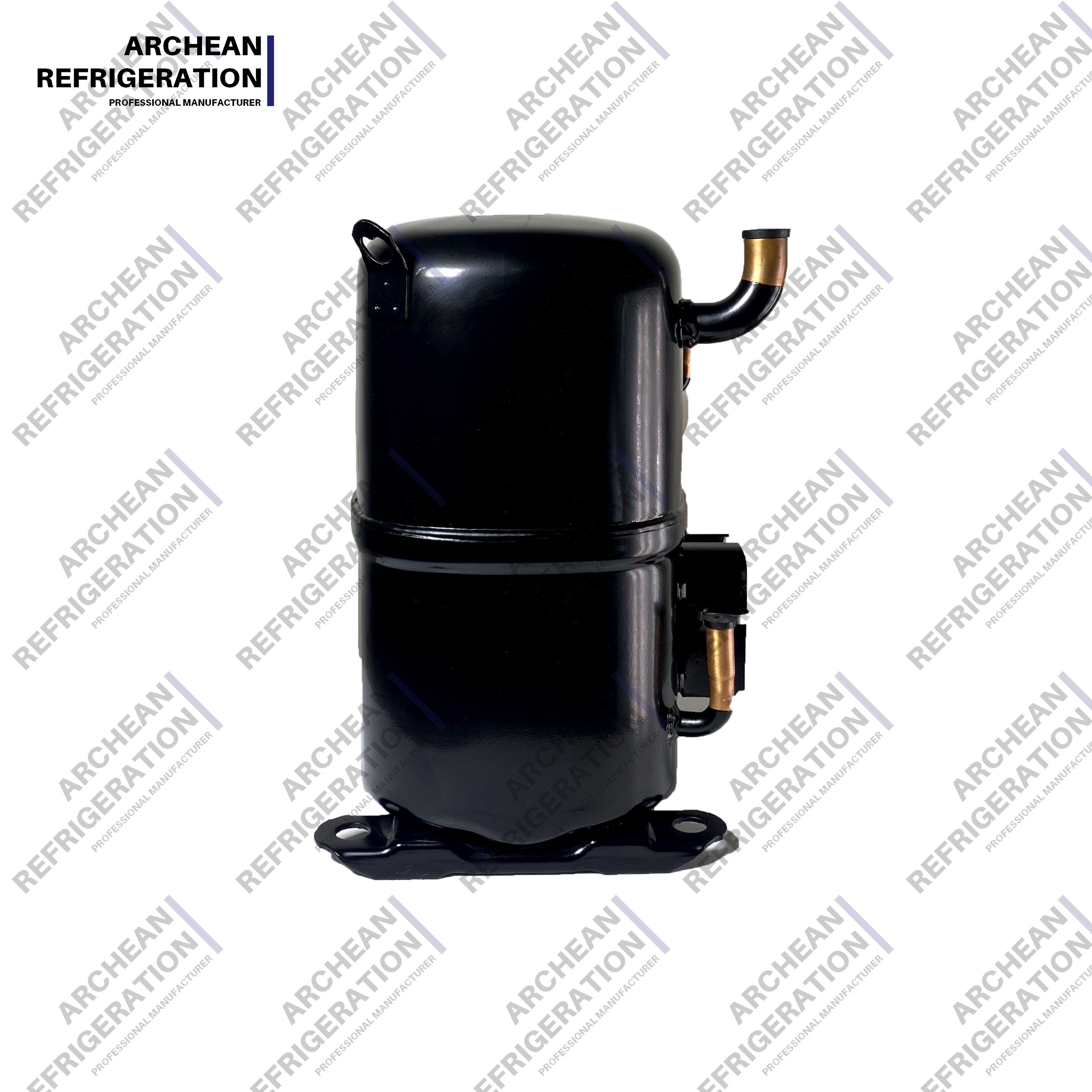
Beyond the mechanical type, sealing dictates daily maintenance realities. How the electric motor connects to the pumping mechanism matters greatly. It determines leak risks, cooling methods, and field repair options.
In this configuration, the motor and compressor live inside a single welded steel casing. They share the same internal environment. The incoming cold suction gas physically washes over the motor windings to keep them cool.
You face zero risk of refrigerant leakage from an external shaft seal. This makes them highly reliable regarding charge retention. However, this design remains entirely non-serviceable. If internal parts fail or a motor burns out, you cannot repair it. You must unbraze the pipes and replace the entire unit. We find a hermetic compressor ideal for small to medium commercial setups. In these scenarios, buyers heavily prioritize low initial purchase costs.
The motor and pump are housed together, similar to fully sealed units. But the heavy cast-iron casing is bolted shut rather than welded permanently. Heavy gaskets seal the different casing sections together.
Technicians can open the unit safely on the job site. They perform extensive field repairs, such as replacing valve plates or rewinding stators. You definitely pay a higher upfront cost for these units. Yet, you achieve a lower lifecycle cost for large, expensive industrial systems. Rebuilding a bolted unit costs far less than buying a massive new one every decade.
The compressor and the electric motor exist as completely separate entities. A mechanical drive belt or a direct heavy-duty coupling connects them. Because the motor sits outside, it does not transfer its heat into the refrigerant stream.
You gain maximum flexibility with this setup. You can swap the motor out independently if it burns out. You can even use gas or diesel engines to drive them. This setup remains incredibly common in industrial ammonia systems. However, it requires a mechanical shaft seal. This rotating seal introduces a potential leak point. You must schedule regular maintenance to inspect and replace it.
Making the right choice requires looking past the spec sheet. You must align the mechanical capabilities with your facility's operational realities.
Do not base vital decisions strictly on purchase price. A cheap unit often consumes massive electricity over its lifetime. Always factor in certified energy efficiency ratings like EER or COP. You must project maintenance intervals accurately. High operational expenses (OpEx) quickly erase any initial capital expenditure (CapEx) savings. A highly efficient unit pays for its premium price tag rapidly through reduced monthly utility bills.
Does your facility have a steady, predictable load? Or does it experience distinct daily peaks and deep valleys? You must evaluate systems equipped with VFDs if your loads fluctuate. Digital capacity modulation also helps tremendously by rapidly loading and unloading internal valves. These technologies prevent destructive short-cycling. Short-cycling starves the internal bearings of oil and drastically reduces motor lifespan.
The global cooling industry is shifting rapidly due to environmental regulations. Ensure your chosen refrigeration compressor is explicitly rated for modern, compliant refrigerants. Think of natural options like CO2 and Ammonia, or low-GWP synthetics. Legacy designs often suffer severe O-ring degradation. They also exhibit poor lubrication returning to the sump when paired with newer A2L mildly flammable refrigerants.
Replacing an old unit with modern technology sounds simple on paper. In reality, field retrofits introduce severe risks. Ignoring these risks leads to immediate equipment failure.
Retrofitting carries hidden chemical dangers. Mixing old mineral oil with modern synthetic lubricants like POE or PVE causes extreme problems. This mismatch often causes heavy sludge formation inside the piping. This chemical reaction leads to immediate, catastrophic bearing failure. You must flush lines perfectly. You must test the oil for acidity before commissioning the new unit.
Sometimes you switch from a bulky reciprocating unit to a sleek modern scroll. You might upgrade to a rotary screw design. When doing this, you must rigorously evaluate existing pipe sizing. Suction gas velocity must remain high enough to carry oil vertically back to the sump. Oil return mechanisms change drastically between compressor types. You also need to verify adequate physical mounting space and structural support.
Be highly skeptical of so-called "drop-in" replacements. Changing a fundamental technology type almost always necessitates deep recalculations. You must recalculate system superheat. You must verify subcooling targets at the condenser. Often, you must upgrade the thermal expansion valve (TXV) entirely to match the new mass flow rate. Failing to do this causes the valve to hunt, flooding the new compressor with liquid.
Selecting the right equipment requires careful engineering balance. You must balance your peak cooling capacity needs, daily load variability, and realistic on-site maintenance capabilities. Ignoring any of these factors leads to unstable system performance.
For small operations with zero-maintenance needs, a welded scroll unit often performs best. They offer quiet reliability and simple installation. For heavy-duty industrial continuous runs, bolted screw models generally win out due to their massive volume handling and rebuild potential.
Always consult with a specialized HVAC/R engineer early in the process. Ask them to perform a precise thermal load calculation. Have them analyze long-term lifecycle costs and regulatory compliance before you initiate procurement.
A: Efficiency depends heavily on the load profile. Scroll compressors are highly efficient for medium, variable loads. Centrifugal and screw compressors offer the absolute highest efficiency for continuous, large-scale industrial loads running at full capacity.
A: Yes, but it requires significant engineering adjustments. You must account for differences in piping configurations, vibration dampening, and oil management systems. You cannot simply swap them without recalculating the system dynamics.
A: A properly maintained semi-hermetic or open-drive compressor can last 15–20+ years, often requiring scheduled rebuilds. A welded hermetic compressor typically lasts 10–15 years before requiring a full replacement.
A: Short-cycling is usually a sign of an oversized compressor, low refrigerant charge, or a malfunctioning thermostat. This rapid on-off behavior results in premature wear, poor oil return, and sharply increased energy usage.


