


+86-15339975475
info@archeanref.com
info@archeanref.com
+8615339975475
Wutongli, linyi, Shandong, China


Views: 0 Author: Site Editor Publish Time: 2026-10-01 Origin: Site


Selecting the right compressor architecture directly dictates energy consumption, system longevity, and facility downtime in commercial refrigeration. You simply cannot afford arbitrary equipment choices when operational margins remain remarkably thin. Today, commercial refrigeration environments face rapidly shifting demands. Global regulators consistently push stricter energy compliance codes across the industry. Simultaneously, traditional high-GWP refrigerants face aggressive, mandated phase-outs globally. These intense industry pressures force facility managers and engineers to completely rethink their equipment strategies.
We designed this comprehensive guide to help you navigate these critical changes effectively. It provides an evidence-based framework for evaluating the two dominant compressor technologies for commercial applications. You will learn exactly how internal mechanics influence daily reliability and operational risks. We will explore key performance metrics, energy efficiency comparisons, and real-world maintenance realities. By the end, you can confidently match the correct compressor design to your specific facility requirements.
Understanding internal mechanics helps you anticipate equipment behavior. Physical design governs how machines handle stress over time. We must examine how these differing internal movements dictate overall reliability.
Scroll models operate using an elegant orbital motion. They feature significantly fewer moving parts than traditional designs. They lack delicate suction and discharge valves entirely. Inside the casing, one scroll piece remains completely stationary. A second scroll piece orbits continuously inside the stationary one. This precise movement creates shrinking gas pockets. The gas compresses continuously as it moves toward the center discharge port.
This architecture offers inherent physical flexibility. Engineers call this axial and radial compliance. The interlocking scrolls can separate slightly under abnormal stress. This temporary separation allows them to handle minor liquid slugging safely. Liquid refrigerant or small debris can pass through the system. The machine avoids catastrophic mechanical failure during these events. You get an incredibly robust solution for medium-temperature systems. They run smoothly for years without internal mechanical adjustments.
Reciprocating models utilize a more traditional mechanical approach. These units rely on a robust piston-cylinder mechanism. An internal crankshaft drives the pistons rapidly up and down. Flat metal suction and discharge valves regulate the gas flow into each cylinder. This aggressive mechanical pumping provides exceptionally high cooling capacity.
However, volumetric efficiency dynamics change under pressure. A physical clearance volume exists between the top of the piston and the valve plate. Some high-pressure discharge gas always remains in this tiny space after compression. When the piston moves down, this trapped gas expands again. This re-expansion physically blocks incoming low-pressure suction gas. Consequently, volumetric efficiency drops significantly at higher compression ratios.
You must also acknowledge the inherent physical stress points. Reciprocating units depend on moving valves, connecting rods, wrist pins, and piston rings. These internal components endure intense, constant mechanical stress. They dictate strict, recurring maintenance schedules. You must plan for periodic rebuilds to keep them running efficiently.
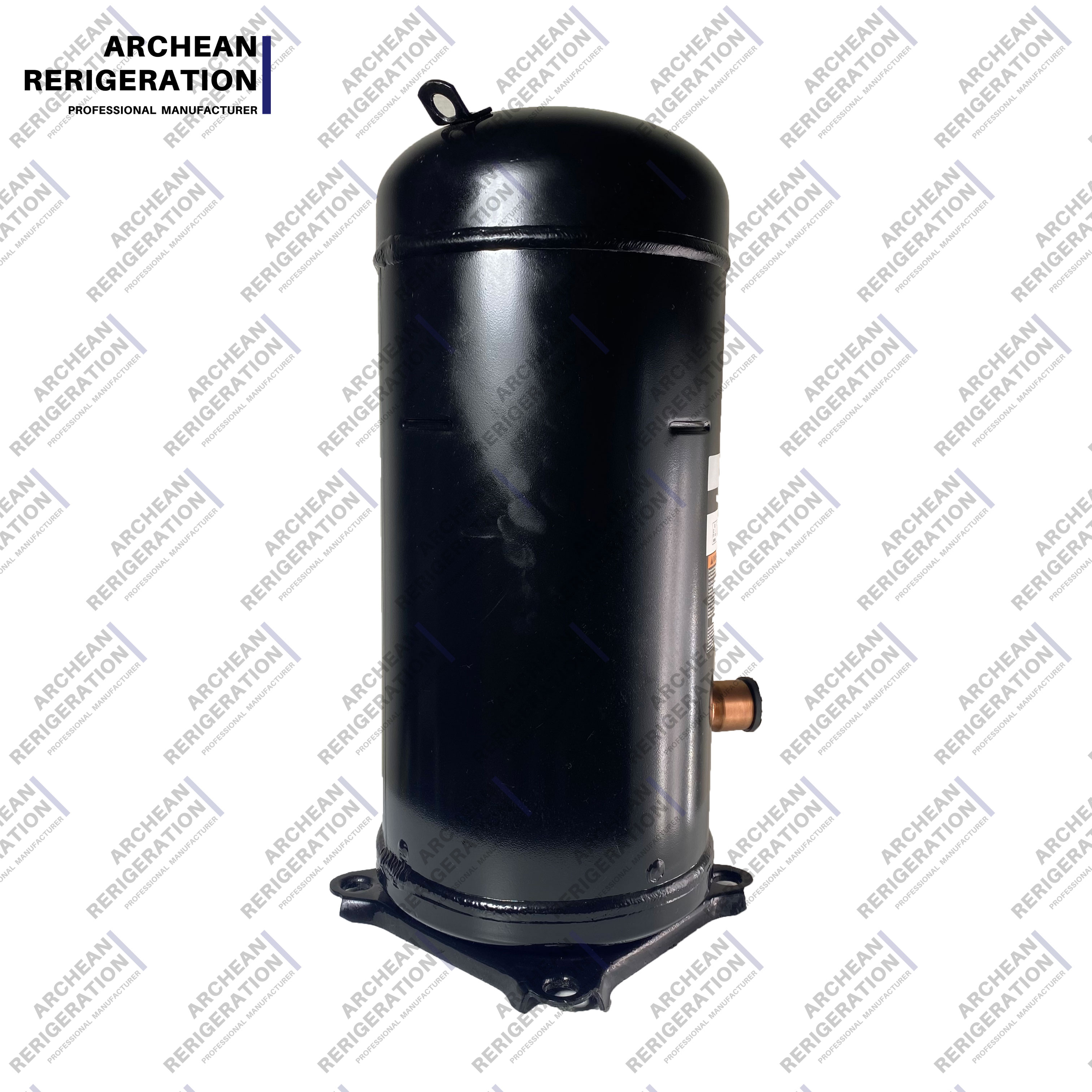
Evaluating a scroll vs reciprocating compressor requires looking far beyond basic marketing spec sheets. You must analyze how each specific design performs under wildly varying commercial conditions. We break down the most crucial evaluation criteria below.
Energy consumption heavily drives your long-term operational expenses. Scroll designs generally maintain much higher volumetric efficiency. They do not suffer from the re-expansion of clearance gas at all. This physical advantage translates directly to lower baseline energy consumption. They operate with remarkable smoothness across varying pressure conditions. You see highly consistent performance in continuous, steady-state cooling applications.
Reciprocating models often lose efficiency at extreme pressure ratios. The clearance volume effect becomes significantly more pronounced in these situations. However, you must evaluate continuous operation versus rapid cycling. Scrolls excel dramatically during long, uninterrupted run cycles. Reciprocating units, structurally speaking, handle frequent start-stop cycles more robustly. Evaluate your facility's specific daily thermal load profile carefully before deciding.
Acoustical impact matters immensely in modern commercial spaces. Retail grocery floors and luxury hospitality venues require whisper-quiet environments. Scroll models inherently generate significantly lower noise levels. They lack the aggressive torque pulsation typical of piston mechanisms. You experience minimal vibration transmission into the surrounding building structure. The continuous rotary motion ensures remarkably smooth operation.
Reciprocating designs generate a noticeable start-stop mechanical pulsation. The rapid internal valve operation creates distinct clattering sounds. You must often install heavy vibration isolators to dampen this movement. They also demand a considerably larger physical footprint in the mechanical room. Facility managers must account for these strict spatial and acoustic limits during the design phase.
Modern refrigeration demands incredibly precise load management. We can no longer rely on simple on-off thermostatic controls. Both compressor architectures now successfully utilize inverter-driven variable speed options. Variable frequency drives (VFD) allow for exceptional capacity modulation. Scroll units respond beautifully to VFD integration. They seamlessly adjust their rotational speed to match changing cooling loads accurately.
However, reciprocating models hold a massive traditional advantage here. They utilize mechanical cylinder unloading for precise, staged capacity reduction. Technicians can electronically deactivate specific cylinders while the motor keeps running. This staged capacity reduction handles wild load fluctuations highly effectively. It provides robust, fail-safe control in demanding heavy industrial settings.
| Evaluation Feature | Scroll Architecture | Reciprocating Architecture |
|---|---|---|
| Internal Mechanical Motion | Continuous orbital movement | Up-and-down piston strokes |
| Liquid Slugging Tolerance | High tolerance for minor liquid ingestion | Low tolerance; brittle valves break easily |
| Field Repairability | Usually requires complete full-unit replacement | Fully rebuildable internally on-site |
| Acoustic Noise Levels | Quiet operation; low vibration transmission | Louder operation; distinct mechanical pulsation |
| Capacity Modulation Strategy | VFD speed adjustment primarily | Mechanical cylinder unloading and VFD |
Upfront equipment costs represent only the beginning of your investment. You must weigh initial capital expenditures against long-term lifecycle durability. Scroll units generally present a much lower initial cost. This aggressive pricing strongly favors low-to-medium capacity commercial applications. They offer incredibly reliable, maintenance-free operation for many years.
Reciprocating compressors carry noticeably higher upfront price tags. However, they offer exceptionally extended operational lifespans. Proper maintenance schedules ensure they comfortably outlast many hermetic scroll alternatives. You essentially pre-pay for decades of viable service life.
Field technicians face a stark reality during major equipment failures. Most commercial scrolls operate strictly as hermetic or semi-hermetic units. Internal mechanical failures usually require complete compressor replacement. You cannot simply open the welded shell to repair internal bearings. This limitation forces expensive, heavy replacements for large-tonnage commercial systems. When they break, they go to the scrap yard.
Reciprocating models follow a fundamentally different repair philosophy entirely. Manufacturers intentionally build semi-hermetic reciprocating designs for direct field serviceability. Technicians can unbolt the cast-iron casing relatively easily. They replace worn valve plates, swap damaged pistons, or rewind burnt stators directly on-site. This targeted rebuild strategy saves massive replacement costs over time. Heavy industrial sites rely completely on this deeply repairable nature.
Different mechanical architectures fail for entirely different reasons. You must understand basic liquid return risks clearly. Scroll models handle occasional liquid slugging reasonably well. Their internal radial compliance lets liquid pass harmlessly into the discharge line. However, chronic slugging eventually destroys the delicate scroll set.
Reciprocating units remain violently sensitive to liquid return. Compressible fluids damage rigid metal valves and cast pistons almost instantly. Oil management also differs significantly between the two. Reciprocating systems require strict, constant oil level monitoring. Contamination cleanup proves vastly easier in rebuildable piston units. Hermetic scrolls trap acidic contaminants internally, greatly complicating systemic system cleanups.
We recommend the following risk mitigation steps:
You must meticulously match the technology to the specific application. Proper sizing requires a deep contextual analysis of your facility needs.
Medium-temperature commercial applications benefit immensely from orbital technology. Walk-in coolers, supermarket display cases, and prep rooms represent perfect use cases. Retail grocery environments prioritize daily reliability, compact spatial footprints, and extremely low noise. Hermetic scroll designs fit these strict architectural constraints perfectly.
Industry leaders heavily utilize this specific technology tier globally. For example, the Copeland scroll compressor dominates modern commercial retail spaces everywhere. Facility managers deeply trust its consistent performance and quiet daily operation. You should always specify this option when mechanical space and ambient noise pose strict facility limits. It delivers exceptional value for predictable, continuous loads.
Heavy industrial demands require vastly different, robust mechanical resilience. Ultra-low temperature applications push equipment to its absolute physical limits. Blast freezers, pharmaceutical storage, and large cold storage facilities fit this profile perfectly. These massive systems require immense cooling capacities. They also experience significant, sudden thermal load fluctuations daily.
Field-serviceable equipment absolutely shines in these demanding environments. Engineering design teams frequently specify the Danfoss compressor for these heavy-duty requirements. These massive units handle extreme pressure ratios highly effectively. Skilled technicians can maintain them proactively over decades of grueling use. They remain the undisputed champions of heavy commercial refrigeration.
Modern environmental regulations force immediate, disruptive refrigerant transitions globally. Both compressor architectures adapt reasonably well to low-GWP (Global Warming Potential) options. CO2 (R-744) systems operate at extremely high transcritical pressures. Specialized semi-hermetic reciprocating designs handle these intense CO2 pressures exceptionally well. Their thick cast-iron bodies contain the extreme forces safely.
Scroll designs adapt rapidly to emerging A2L mildly flammable refrigerants. These new refrigerants require heavily optimized internal geometries to run safely. Manufacturers continuously update their product lines to match shifting chemical landscapes. Always verify chemical and oil compatibility thoroughly before finalizing any equipment specification.
The ultimate equipment decision hinges on balancing immediate efficiency against long-term maintenance infrastructure. You must evaluate your specific cooling loads objectively. No single technology serves every commercial application perfectly. You must weigh upfront capital against expected lifespan realistically.
Before making a final selection, review this essential evaluation checklist:
You need precise engineering data to finalize your strategic equipment strategy. Contact your dedicated engineering and sales team today. We can perform a custom thermal load calculation for your unique facility. We will gladly recommend the exact system configuration necessary for your optimal performance.
A: It depends strictly on your definition of longevity. Scroll models typically deliver far more continuous run hours without requiring any major maintenance. However, reciprocating units offer a vastly superior rebuildable lifespan. Technicians can replace internal valves and pistons indefinitely, allowing heavy-duty models to run for decades.
A: Traditionally, reciprocating units managed variable loads better using mechanical cylinder unloading. Today, modern variable-frequency drive (VFD) scroll units offer truly exceptional load matching. They ramp motor speed up or down smoothly, making them highly efficient for fluctuating daily demands in retail environments.
A: The noise stems directly from their internal mechanics. They rely entirely on rapid start-stop piston strokes and snapping metal valve plates. This aggressive mechanical pulsation generates significant sound and vibration. Conversely, orbital scroll models use continuous rotary motion, eliminating violent mechanical transitions completely.
A: Yes, they tolerate minor slugging vastly better than piston alternatives. Their internal scroll plates feature radial and axial compliance. This physical flexibility allows them to separate slightly, passing small amounts of liquid refrigerant harmlessly. However, chronic or severe liquid slugging will eventually cause catastrophic mechanical failure.


