


+86-15339975475
info@archeanref.com
info@archeanref.com
+8615339975475
Wutongli, linyi, Shandong, China


Views: 0 Author: Site Editor Publish Time: 2026-10-26 Origin: Site


Living on the water presents a unique set of logistical challenges. When you drop anchor in a pristine remote cove with the afternoon sun beating down on the teak deck, reaching below for a cold drink only to find your provisions lukewarm is incredibly frustrating. Keeping perishable food fresh and beverages cold while navigating severely limited cabin space, unpredictable rough seas, and strictly finite battery power is a constant battle for sailors.
Standard household refrigerators fail miserably under these harsh realities. They are excessively bulky and drain AC power at an alarming rate. More importantly, their internal mechanics inevitably seize when subjected to the relentless pitching and rolling of a vessel underway. The solution to this maritime dilemma lies in highly specialized engineering. The miniaturized compressor has emerged as the unsung hero of modern Marine Refrigeration. These compact powerhouses are specifically designed to address the exact pain points that yacht owners, liveaboards, and off-grid cruisers face daily. By shrinking the mechanical footprint without sacrificing thermal capacity, manufacturers have created cooling systems that actually thrive in dynamic, unstable environments.
In the following sections, we will explore exactly why these specialized compressors have become the undisputed industry standard for boats. We will examine how their internal mechanics interact with off-grid electrical networks and outline the critical specifications you need to look for when upgrading your own galley.
Miniaturized Performance: Advanced compressors deliver high-performance cooling within a fraction of the physical footprint of traditional units. This enables space-saving installations in tight boat galleys.
Power Optimization: Utilizing highly efficient 12V or 24V direct current technology, these systems integrate seamlessly with solar arrays and off-grid marine battery banks.
Mechanical Resilience: The internal rotary mechanism allows marine fridges to function flawlessly, even when a boat is crashing through waves or heeled over at steep sailing angles.
Environmental Durability: Engineered specifically for the ocean, these units feature sealed components and corrosion-resistant materials to withstand saltwater exposure and heavy engine vibration.
To truly appreciate the value of marine-grade cooling equipment, it is essential to first understand its foundational mechanics. In any refrigeration loop, the compressor acts as the beating heart. It pumps chemical refrigerant through a closed circuit, compressing the gas to increase its temperature and pressure before pushing it through a condenser to release heat. A purpose-built Micro Compressor performs this exact same thermodynamic cycle. However, its physical execution is entirely tailored to the strict spatial and electrical constraints of a floating home.
The thermodynamics of heat transfer remain constant across all environments. Yet, the mechanical design changes drastically when adapting to life at sea. Standard residential refrigerators rely on large, heavy, AC-powered reciprocating compressors. These domestic units utilize a bulky piston-driven mechanism housed in thick steel or cast-iron casings. Crucially, they depend on gravity to keep a pool of lubricating oil settled at the bottom of the shell.
In stark contrast, a purpose-built marine compressor is designed for relentless mobility. Engineers utilize advanced brushless direct current motors and precision-machined internal components to reduce the overall size and weight by up to 60 percent compared to traditional models. This creates a lightweight, highly efficient device that does not rely strictly on gravity for internal lubrication. Consequently, it easily survives the dynamic motion of the ocean.
Space dictates everything on a vessel. From narrowboats navigating inland canals to ocean-going catamarans, maritime architecture requires that every square inch be utilized with absolute efficiency. Standard domestic appliances simply do not fit the ergonomic or structural realities of a curved boat hull.
The integration of Compact Cooling technology is what allows marine shipwrights to design galleys that conform to awkward geometries. Boat kitchens often feature sloping hull lines, shallow countertops, and restricted cabinet depths. Because the compressor occupies minimal space, the ratio of the appliance external dimensions to its internal storage volume is highly optimized. A smaller mechanical compartment directly translates to a larger internal capacity. Therefore, boat owners do not have to sacrifice essential food storage just to accommodate bulky machinery.
The spatial benefits extend far beyond traditional front-opening refrigerators. Many modern marine setups utilize unconventional formats to preserve cabin flow. Top-loading drop-in fridges, bench-style freezers hidden beneath settee cushions, and drawer-style coolers rely entirely on the minuscule footprint of these specialized compressors. Top-loading iceboxes are particularly popular in the cruising community because cold air is denser than warm air. When the heavy lid is opened, the chilled air remains pooled inside rather than spilling out onto the cabin floor. These custom fiberglass or stainless-steel boxes are often paired with a remote cooling unit, where the compressor is installed in a ventilated locker several feet away, further preserving valuable living space.
While carving out physical space is the first hurdle of boat design, managing the electrical load is arguably an even steeper challenge. Unlike a house connected to a stable municipal power grid, a boat operates as an independent micro-grid. Energy efficiency is not just a preference for sailors; it is an absolute operational necessity.
Vessels predominantly run on 12-volt or 24-volt battery systems. Attempting to run a standard AC household refrigerator on a boat forces you to use an inverter, which converts the DC battery power into AC power. This conversion process is inherently inefficient. It typically results in a 10 to 15 percent energy loss, dissipating valuable battery reserves purely as heat.
By utilizing a purpose-built DC Compressor, the refrigeration unit draws power directly from the house battery bank, eliminating wasteful inverter losses entirely. Furthermore, these marine units are engineered with variable speed drives. Instead of a binary on and off cycle that causes massive electrical spikes, a variable speed motor ramps up smoothly and maintains a low, steady amp draw. This gentle power consumption prevents the rapid depletion of deep-cycle batteries and significantly extends the lifespan of the vessel electrical architecture.
Modern cruising often involves dropping anchor in secluded bays for weeks at a time. To sustain this off-grid lifestyle without running a noisy, foul-smelling diesel generator, boaters rely heavily on renewable energy. The exceptionally low energy consumption of a miniaturized compressor pairs perfectly with marine solar setups. A well-insulated fridge equipped with a high-efficiency DC motor typically draws only 2.5 to 5 amps while running. Assuming a standard duty cycle, the total daily consumption often ranges between 30 to 60 amp-hours. This modest load can easily be replenished by a standard 200W to 400W solar array, granting vessels true energy autonomy.
A boat underway is subjected to dynamic physical forces that would instantly destroy standard household appliances. The marine environment is characterized by constant violent motion, sudden wave impacts, and a highly corrosive atmosphere. Equipment must be heavily fortified to survive.
The mechanical architecture of the cooling unit is the primary factor in its ability to survive rough seas. As previously mentioned, standard reciprocating compressors rely on a pool of oil at the bottom of the casing. If the unit tilts past 15 degrees, the oil shifts. The piston then starves of lubrication, and the metal components grind themselves to destruction.
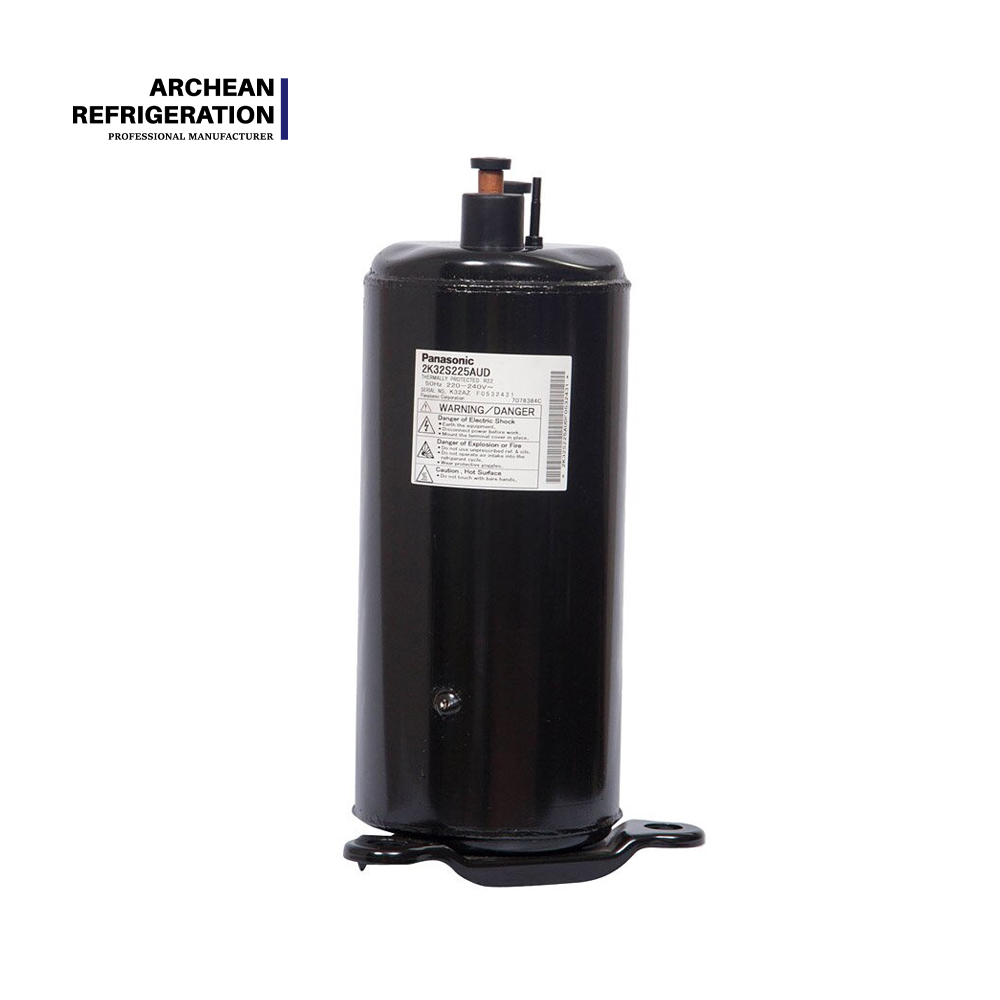
Marine systems almost exclusively utilize the robust architecture of a Rotary Compressor. For instance, industrial-grade units like the Panasonic 2K32S225AUD utilize a micro 3-phase rotary design. This specific architecture uses a cylindrical roller that rotates inside a cylinder to compress the refrigerant gas. Because of its centrifugal nature, it is far less dependent on gravity for oil distribution. This ensures that even during violent hull slamming or a sustained 30-degree heel, the internal roller maintains precise compression without suffering from oil starvation. Additionally, the compact, balanced nature of the rotary mechanism makes it inherently more resistant to the high-frequency vibrations generated by inboard diesel engines.
The ocean atmosphere is saturated with moisture and salt, creating an aggressive, electrolyte-rich environment that rapidly accelerates the oxidation of metals. A standard steel appliance casing will rust, degrade, and suffer electrical shorts within a single season if exposed to marine air.
To combat this relentless degradation, marine compressors are manufactured using stringent anti-corrosion protocols. Outer casings are treated with heavy-duty epoxy or polyurethane coatings. Critical electrical connections are hermetically sealed against humidity. External mounting components often utilize 316-grade stainless steel or anodized aluminum. This intense focus on material science ensures the internal mechanics remain protected from the highly corrosive maritime climate.
Looking at recent market shifts, the demand for off-grid autonomy is rapidly reshaping maritime equipment standards. As more cruisers adopt high-capacity lithium iron phosphate battery banks and expansive solar arrays, the refrigeration sector is evolving in tandem. Industry analysis reveals a strong transition away from traditional thermostatic cooling methods toward smart, digitally controlled systems. Modern manufacturers are focusing on integrating intelligent control modules that automatically adjust the compressor RPM based on real-time battery voltage. This maximizes efficiency during low-light conditions when solar yield is poor.
In addition, global environmental regulations are driving rapid innovation. There is a concerted push across the maritime sector to adopt low Global Warming Potential refrigerants like R134a or R600a. To accommodate these eco-friendly gases without losing thermodynamic efficiency, the internal architecture of micro compressors has been highly refined. This ongoing miniaturization trend not only benefits yachts but is increasingly spilling over into the overland RV and tiny home markets. It proves that technology forged for the sea is setting the benchmark for mobile living worldwide.
Even the most robust marine equipment requires occasional maintenance. When a fridge fails to cool properly in a remote anchorage, understanding common symptoms can save your provisions and prevent an expensive service call.
A frequent observation among boaters is that their compressor seems to run continuously without ever cycling off, rapidly draining the house batteries. Empirical data suggests that the most common causes are environmental rather than mechanical. Degraded rubber door gaskets are a primary culprit. If they are cracked, warm, humid ocean air constantly leaks into the box, forcing the system to work overtime. Similarly, degraded polyurethane foam insulation in older boats allows cold to escape. In rarer instances, a continuous run cycle may indicate a micro-leak in the copper refrigerant lines or a faulty mechanical thermostat failing to signal the shutdown phase.
Thermodynamics dictates that a refrigerator does not actually create cold; it removes heat from the insulated box and expels it into the surrounding environment. Therefore, even the most advanced cooling systems need adequate airflow to breathe.
If a compressor is installed deep inside a sealed marine locker without proper ventilation, the ambient air temperature around the condenser coils will skyrocket. As heat builds up, the compressor must work significantly harder to push the refrigerant through the system. This causes a massive spike in electrical amp draw and can eventually lead to a thermal overload, prompting the system to shut down to protect itself. Ensuring proper airflow by installing louvered vents or low-draw DC exhaust fans is standard practice for maintaining efficiency. Regularly brushing dust and pet hair off the condenser fins will also drastically improve performance.
Whether you are upgrading an old inefficient icebox or replacing a completely failed unit, selecting the correct hardware requires matching technical specifications to the physical realities of your vessel. An abstract understanding is not enough; you need hard parameters.
The most critical step in system design is ensuring the cooling capacity measured in BTUs or Watts matches the internal volume of the refrigerator box and the thickness of its insulation. An undersized compressor will run continuously, failing to keep food frozen while wearing out prematurely. Conversely, an oversized unit may cause short-cycling, which is highly inefficient for battery consumption. As a general engineering baseline, a standard spill-over fridge and freezer combination of up to 5 cubic feet requires a compressor capable of moving at least 200 to 250 BTUs per hour. This assumes a minimum of 3 to 4 inches of closed-cell foam insulation.
When evaluating different models for a marine environment, decision-makers should look for specific engineering features that guarantee longevity and off-grid efficiency. Prioritize the following specifications:
Feature | Engineering Benefit |
|---|---|
Pulse Width Modulation Control | Allows the compressor to adjust its RPM based on cooling demand, significantly reducing overall battery consumption. |
Low-Voltage Disconnect | Automatically shuts off the compressor if the battery bank drops below a safe voltage, preventing permanent damage to deep-cycle batteries. |
Rotary Architecture | Ensures continuous internal lubrication even when the vessel is heeled over at 30 degrees, preventing mechanical seizure. |
Sealed Control Module | Protects the sensitive electronic circuit board from salt spray, high humidity, and accidental water ingress. |
The miniaturized compressor remains the undisputed heartbeat of modern marine refrigeration. It perfectly balances the difficult triad of boat life: severe spatial constraints, strict energy limitations, and the need for extreme physical durability. By leveraging advanced DC technology and robust rotary mechanics, these systems allow sailors to enjoy the comforts of home—like fresh produce and ice-cold drinks—no matter how far off the grid they travel.
To get the most out of your investment, remember to properly maintain your current setup by ensuring adequate locker ventilation, checking door seals, and monitoring your daily power draw. If your current appliance is constantly draining your batteries or struggling to hold a freeze, it is time to upgrade to a modern, variable-speed system. Take the time to explore advanced cooling solutions for your next marine project. For high-performance, marine-grade components, explore the extensive catalog at Archean HVACR to find the exact compressor specifications needed to achieve reliable, efficient onboard refrigeration.
While standard dorm-style mini-fridges present a cheaper upfront cost, they are highly impractical for marine use. They require AC power, meaning you must constantly run an inefficient inverter that drains your battery banks quickly. Furthermore, they are not mechanically built to withstand the constant tilt, shock, and vibration of a boat underway. Their standard steel components will rust rapidly in a humid, saltwater environment. A purpose-built marine fridge is significantly more reliable, energy-efficient, and durable.
Power consumption varies based on the size of the refrigerator box, the ambient climate, and the thickness of the insulation. However, a typical DC compressor in a well-insulated marine icebox will draw between 2.5 to 5 amps while running. Because the compressor cycles on and off rather than running continuously, the total daily energy consumption usually falls between 30 to 60 amp-hours. This load is highly manageable for standard marine solar arrays and battery systems.
Yes, absolutely. A rotary compressor is fundamentally better suited for mobile and marine applications. Reciprocating compressors rely on gravity-dependent oil baths and can suffer catastrophic mechanical failure if operated at an angle. Rotary compressors, however, can operate efficiently at steep angles. This is crucial for sailboats heeling in the wind. They also handle the physical shocks, hull impacts, and high-frequency engine vibrations much better than their reciprocating counterparts.
When properly installed and routinely maintained, a high-quality marine compressor is an exceptionally durable piece of equipment. With adequate cabinet ventilation to prevent overheating and a stable voltage supply to protect the internal electronics, these units can easily last 10 to 15 years or more. They achieve this even when subjected to the harsh, corrosive conditions of the ocean. Regular checks of the condenser coils and electrical connections will help maximize this lifespan.
Common signs of compressor failure include unusual mechanical noises like loud clanking or grinding, which indicate internal wear or oil starvation. If the compressor runs continuously but the fridge box fails to drop in temperature, it often points to a loss of compression or a refrigerant leak. Additionally, if the unit trips the circuit breaker or blows fuses repeatedly upon startup, the internal motor windings may be short-circuiting.
Yes, modern micro compressors are engineered specifically for low power consumption, making them ideal for solar integration. Since a high-efficiency DC compressor typically consumes only 30 to 60 amp-hours per day, a dedicated 200W to 400W solar array paired with a properly sized deep-cycle battery bank can easily sustain the refrigeration load indefinitely. The key is ensuring your battery bank has enough capacity to carry the system through the night and during overcast days.


